
Commercial Laundry Support: Follow the Load

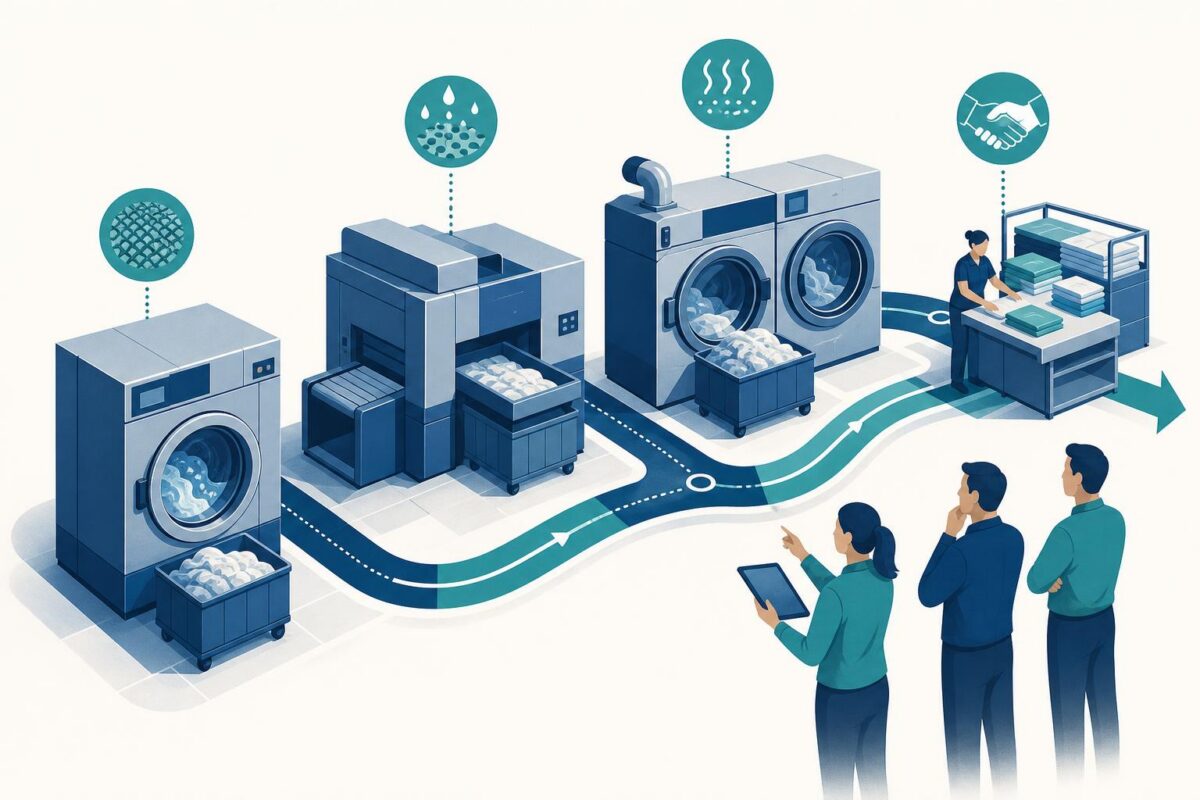
Commercial laundry support works best when the team follows the load, not just the machine named in the complaint. Linen that reaches the finishing area in the wrong condition may have a problem associated with washing, extraction, drying, handling, or storage. The last machine it touched is not automatically the cause.
Viewabo can help a location and a support specialist examine the physical result and discuss the surrounding workflow. The useful outcome is a clearer service question. It is not a remote certification of cleaning, disinfection, fabric suitability, or equipment safety.
Map the load's route
First, identify the affected load and the stages it passed through. Use existing batch or work records where available. If the location mixes loads between stages, note that limitation instead of assuming a complete history.
Ask where someone first noticed the concern. A condition observed immediately after washing deserves a different investigation from one noticed after extended storage. Staff may need time to establish that point, and support should explain why it matters.
Next, identify the equipment actually involved. A facility can have several similar washers or dryers. Put the asset references in the case so the specialist does not build a theory around the wrong unit.
Describe the result in useful terms
"Poor laundry quality" is too broad. Ask whether the complaint concerns visible residue, remaining moisture, damage, an interrupted cycle, or an unexpected operating condition. These are different observations and should remain separate in the record.
Show a representative item through the site's safe handling process. Include enough context to explain the affected area without exposing guest, patient, or customer information. If comparing with an accepted item, establish whether the fabric and process are comparable.
Do not infer a hygiene result from appearance. The location's applicable procedures determine the checks needed for its use. Visual support can help clarify what to investigate, but it cannot replace those requirements.
Give commercial laundry support the operating context
Load composition, processing sequence, and recent approved changes may all help the expert ask better questions. Record them neutrally. A changed load mix is not evidence that staff did something wrong.
Likewise, note whether the symptom affects one load, one item type, or multiple machines. The pattern can shape the service plan. It may also show that the customer needs coordination between equipment service and another responsible provider.
Our independent Electrolux support analysis explores the distinction between garment-care guidance and an appliance-service question.
EPA's original 2012 WaterSense at Work guide includes laundry equipment within commercial facility operations. That is useful background for considering the system around the machine, rather than treating each complaint as an isolated appliance fault.
Keep staff out of the service zone
A remote walkthrough should stay within normal, approved customer activities. Do not ask staff to defeat a door interlock, reach into moving equipment, access hot components, or adjust chemical delivery equipment.
When a technical inspection is needed, identify the qualified person who will perform it. The support team can document the question and the relevant observations. It should not turn an unclear symptom into instructions that exceed the caller's role.
Also avoid repeated trial runs simply to make the problem visible. Each run may consume time and alter the evidence. The site's procedures and authorized personnel should control any diagnostic operation.
Build a service brief that follows the evidence
The brief should name the affected load, item type, processing route, first observed defect, and equipment identities. Include what the site has already checked, along with the source of that information.
Then state the unresolved question. Does the expert need to inspect equipment behavior, review an approved process, or compare results across stages? A focused question is more useful than a demand to "fix the laundry."
Meanwhile, preserve representative evidence when the location can do so appropriately. If every affected item returns to service before the technician arrives, the investigation may depend entirely on memory. Explain what would be useful and let the site manage handling under its own rules.
Confirm the load outcome, not just machine operation
After authorized action, check the stage that originally failed and the final result that the customer needs. A washer that completes a cycle does not settle a complaint that appears after drying. Follow the same load or a suitably controlled comparison through the relevant process.
Record the checks performed and any limits. If the original item type is unavailable, say that the result remains partly unverified. Assign a follow-up rather than treating silence as acceptance.
For laundry support managers, Viewabo can be useful where the physical output and the process story need to come together. Start with one recurring complaint. Define the evidence needed at each stage, keep one owner across handoffs, and judge the approach by whether the resulting service decisions are clearer and the original customer need is actually confirmed.
Background reference: WaterSense at Work, original edition.
Related reading: why video belongs in customer support.