
Commercial Refrigeration Support Before the Service Visit

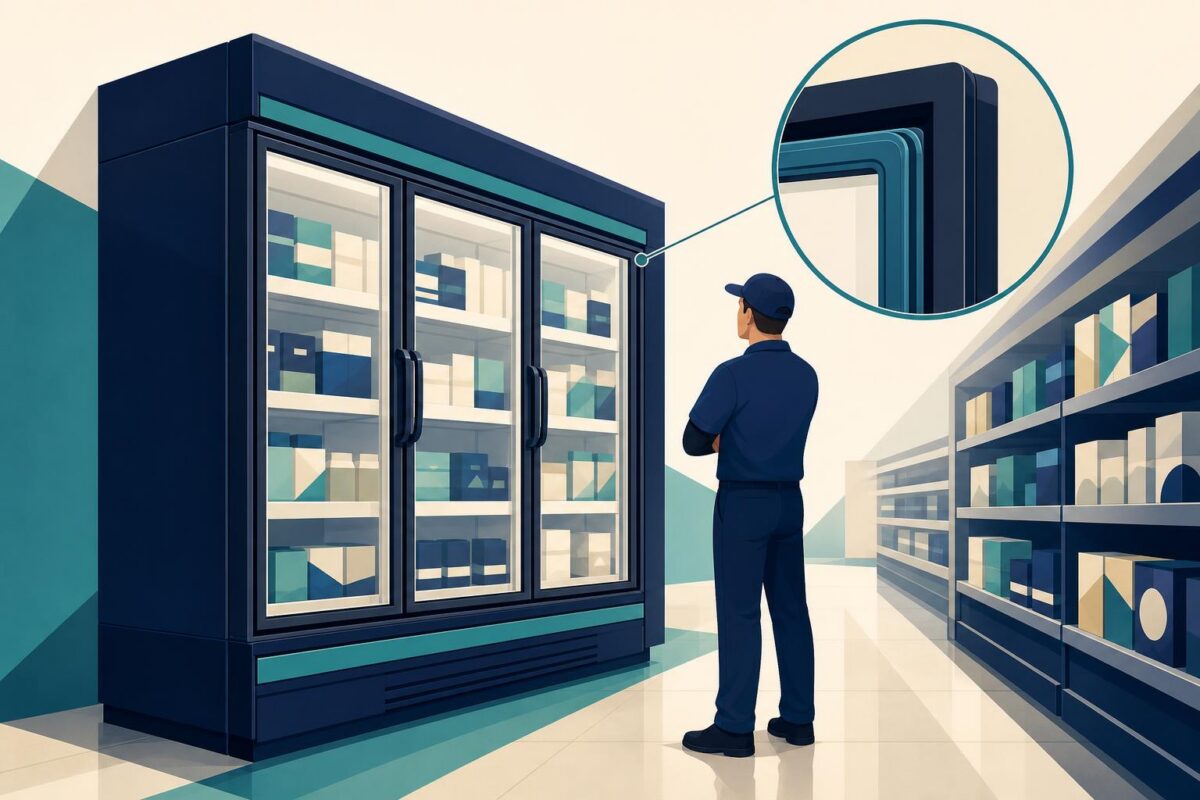
Commercial refrigeration support has two jobs at the start of a call: understand the equipment complaint and make sure the customer follows its product-protection procedures. Those jobs are related, but they are not interchangeable. A clearer view of a cabinet cannot establish that its contents are safe.
Viewabo can help the service team see the cabinet, its surroundings, and the exact location of an observable problem. That can make the next support decision more informed. The approach is most useful when a verbal description leaves uncertainty about which unit, door, compartment, or installation condition the caller means.
Put product protection ahead of troubleshooting
First, identify who on site is responsible for the stored goods and their handling requirements. The support team should not improvise food-safety or product-disposition advice from a remote view. The site's applicable procedures and responsible personnel should guide those decisions.
Then separate the customer consequence from the equipment symptom. "We need to protect this stock" is an urgent operational need. "This compartment is not holding the expected condition" is an equipment report. Both belong in the case.
If the site has approved temperature records or other measurements, keep their time and location with the values. A number without context can mislead. A camera view of a display also does not establish the condition of every item inside the cabinet.
Make commercial refrigeration support location-specific
A facility may contain several similar cabinets. Identify the affected unit with an existing asset reference and a safe view of its external label. Avoid relying only on "the refrigerator beside the counter."
Next, establish whether the complaint concerns the whole unit or a particular area. Ask the caller to describe what changed and when. Keep door condition, visible obstruction, unusual external moisture, and reported performance as separate observations.
A broad view can help the expert understand the installation. However, do not ask staff to move heavy equipment, reach behind energized units, or remove panels. If those actions are necessary, they belong in the qualified service plan.
Ask about the workday around the cabinet
The operating context can be relevant. Record recent loading changes, service visits, cleaning activity, or a change in how the cabinet is used. These are investigation inputs, not proof that the customer caused the complaint.
Also identify when the issue appears. A concern reported after a busy service period may require different follow-up from a constant problem. The technician needs the actual sequence, including any gaps in observation.
The Department of Energy's 2010 operations and maintenance guide provides background on systematic equipment care. For support, the practical lesson is to organize the history instead of replacing it with a single symptom label.
Separate safe observation from refrigeration work
Staff may be able to show a door that does not sit as expected or a product arrangement that blocks the intended area. That does not authorize them to adjust components, access electrical parts, or work on the refrigeration circuit.
Keep each request within the manufacturer's permitted customer activities and the site's rules. If the caller is unsure whether an action is allowed, choose observation or escalation rather than improvisation.
A remote discussion also cannot verify sanitation, electrical safety, or refrigerant condition. State what remains unknown. The purpose of the visual intake is to improve the next action, not to manufacture certainty from a limited view.
Arrange the right visit with the right information
A useful dispatch brief identifies the unit, affected compartment, symptom timing, available measurements, and immediate operating constraints. It also notes access arrangements and the person responsible for the equipment on arrival.
If the cabinet must remain unavailable, document that status through the site's process. If the technician needs a particular operating condition to investigate, coordinate it with qualified personnel. Do not have staff recreate an unsafe condition for the appointment.
Meanwhile, explain what the visit is intended to establish. Customers can plan more effectively when they understand whether the next step is diagnosis, authorized repair, or further verification.
Commercial ice machine support offers a related example of keeping production, storage, and delivery complaints separate before a service visit.
Confirm recovery without overstating the evidence
After service, return to the original complaint. The responsible team should confirm the relevant operating condition using approved measurements and procedures. A running fan or a closed door is not the complete acceptance test.
Record any observation period or follow-up that remains necessary. If the customer needs confirmation across a normal service cycle, keep that requirement visible. Do not confuse a completed service task with a fully verified operating outcome.
Viewabo can support this workflow by helping the customer show what words leave unclear. The strongest use case is better triage and a more useful service handoff. Keep product protection, technical work, and final verification with the people and processes responsible for them.
Background reference: Operations and Maintenance Best Practices Guide, Release 3.0.
Related reading: why video belongs in customer support.