
Conveyor Support: Find Where the Flow Breaks

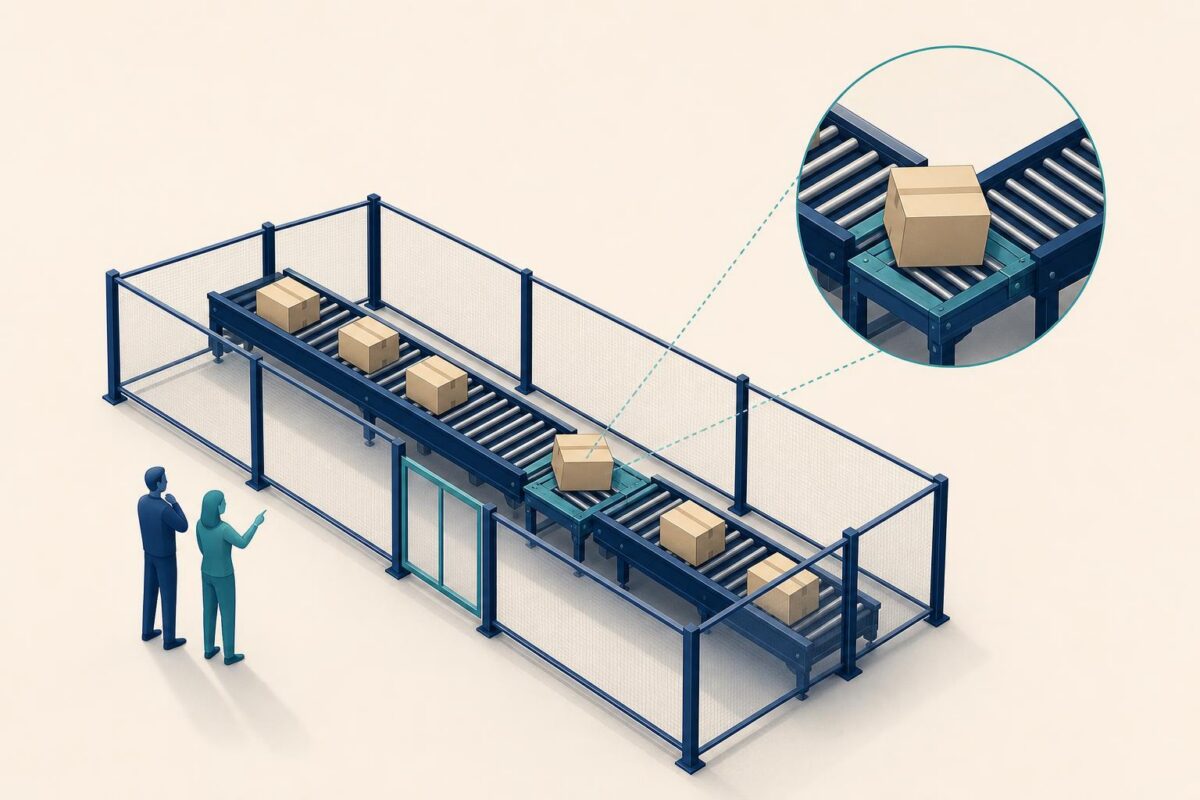
Conveyor support gets easier when everyone can identify the same failed handoff. A caller says the line is jammed. The service specialist needs to know where products stopped moving, what arrived there, and what happened immediately before the stop. Those are different questions.
Viewabo can help the support team and the person on site see the physical situation together. The purpose is not to repair a conveyor through a conversation. It is to replace a vague breakdown report with enough shared context to make a sensible service decision.
Start conveyor support at the first failed transfer
First, distinguish the place where the problem appeared from the place where it began. A pile of cartons at the end of a belt may be the visible result of a downstream blockage. Conversely, one misaligned carton at a transfer may interrupt an otherwise normal flow.
Ask the site contact to identify the affected conveyor and nearby equipment from a safe position. Use names the facility already recognizes. If those names differ from the manufacturer's labels, put both in the service record. That small step prevents the specialist from discussing the wrong segment.
Next, establish the sequence. Did one product stop first? Did several zones stop together? Was the line already idle when someone noticed the problem? Record uncertainty explicitly instead of filling in a plausible story.
Show the product as well as the equipment
The item being moved is part of the support problem. Carton size, loose wrapping, an overhanging load, or a changed container can alter the context. None of those observations proves the cause. However, they tell the expert which questions deserve attention.
Compare a rejected item with a normal example away from the moving line. Show its base, orientation, and packaging condition. Also identify whether the complaint affects every product or only a particular order, size, or batch.
For example, a team investigating one carton format should not receive a service brief that says only "conveyor stopped." The more useful description identifies the affected format and the transfer location. That gives the technician a starting point without pretending that support has diagnosed a mechanical defect.
Keep observation separate from intervention
A request for a better view must never become a request to reach past a guard. Do not ask an operator to clear a blockage, enter a restricted area, or restart equipment just to reproduce the complaint. Follow the site's authorized procedures and the manufacturer's instructions.
OSHA's 2002 hazardous-energy guidance provides relevant background on servicing controls. A visual support conversation does not replace those controls or determine who is qualified to work on the machine.
Instead, use the views that are safely available. Existing operator information, externally visible labels, and a description of the stopped condition can be enough to improve dispatch. If a closer inspection requires authorized service personnel, make that the next action.
Build a handoff the technician can use
A useful conveyor service brief answers five questions: which section, which product, which symptom, under which conditions, and what remains unknown. It should also identify who has authority to provide access when the technician arrives.
Include the relationship to upstream and downstream equipment. The specialist may need to coordinate with another vendor or the site's controls team. Discovering that dependency before the visit is more useful than discovering it beside a stopped line.
Meanwhile, preserve the distinction between an observation and an interpretation. "Cartons accumulated before transfer B" is an observation. "The drive failed" is a diagnosis. Keep the first unless a qualified person has established the second.
Choose the next action, not the most optimistic answer
Conveyor support may end with a remote explanation, a request for records, or an on-site inspection. Each can be a good outcome if the evidence supports it. Avoid treating an avoided visit as the only measure of success.
Sometimes a visit is clearly necessary, but the right specialist remains uncertain. Shared visual context can help settle whether the immediate question concerns the conveyor, packaging, or an adjacent process. It can also reveal access needs that affect the service plan.
Set a concrete next checkpoint. Name the owner, the evidence still needed, and the time for an update. A customer should not have to interpret silence as progress while the production team waits.
Close against the original flow problem
After authorized work, verify the complaint under the site's approved operating process. Ask whether the same product now passes the same transfer under the relevant conditions. A machine that starts is not necessarily a line that performs the required task.
Record any limits to that verification. Perhaps the affected carton format is not available until the next shift. In that case, distinguish work completed from outcome confirmed. Keep ownership open until the agreed check happens.
Preventive maintenance support turns a recorded conveyor observation into assigned work rather than leaving it in an informal shift note.
For support leaders, the practical opportunity is straightforward. Use Viewabo where physical ambiguity is delaying the next decision. Connect the visual discussion to a clear service brief, then judge its value by the quality of the handoff and the customer's confirmed result.
Background reference: Control of Hazardous Energy, OSHA 3120.
Related reading: why video belongs in customer support.