
Dehumidifier Support: Follow the Water Collection Path

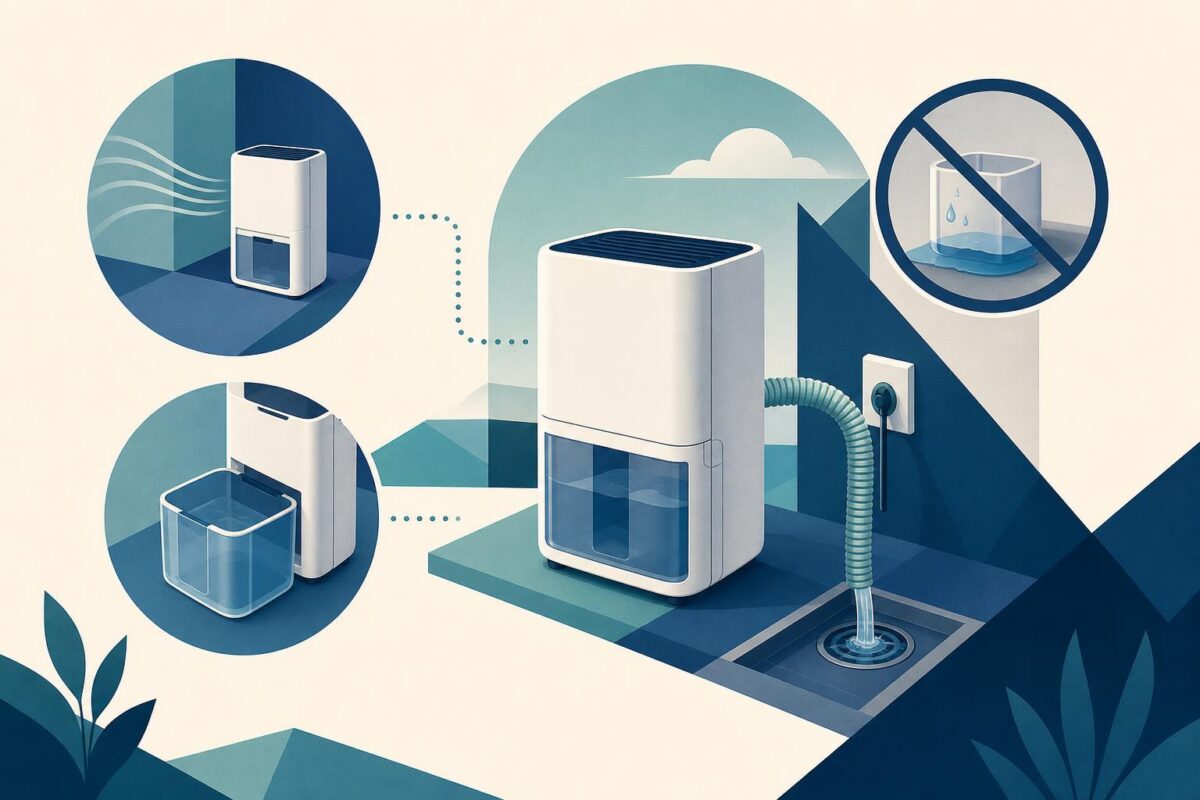
Dehumidifier support should follow the water collection path and the customer’s humidity complaint separately. A full tank, an unexpected stop, and a room that still feels damp are not the same problem. If support treats every case as a failed compressor, it can miss a normal control or collection issue. If it treats every case as maintenance, it can miss a serious hazard.
Viewabo can help an agent understand the visible tank, controls, and accessible drainage arrangement. The benefit is a clearer support decision. It does not measure room moisture through a camera, inspect sealed components, or establish electrical safety from a normal-looking exterior.
Dehumidifier support starts with identification and risk
Confirm the brand and exact model before requesting operation. Check the relevant recall and manufacturer guidance. The CPSC’s CPSC New Widetech dehumidifier recall shows why apparently familiar dehumidifiers need model-specific identification and why some cases require immediate stop-use instructions.
Ask about unusual heat, smoke, burning smells, damage, or water near electrical equipment. Those conditions should stop ordinary troubleshooting and trigger the appropriate professional or emergency response. Do not ask the customer to run the unit again to confirm the report.
For an ordinary performance complaint, record what the customer expected and what they observed. Distinguish a displayed message from a subjective sense that the room remains damp.
Identify the collection arrangement
Ask whether the unit uses its tank or a documented drainage setup. Compare the visible configuration with the correct instructions. A tank-based process and a continuous-drain arrangement can create different support questions.
Use a safe, accessible view. The customer should not move a heavy water-filled appliance, disconnect uncertain plumbing, or reach behind wet electrical equipment. If the relevant connection cannot be examined safely, arrange appropriate help.
Record whether the collection arrangement changed recently. A moved hose or replaced tank can be a useful lead, but do not declare it the cause without the supported checks.
Read the control state in context
Ask the customer to read the selected mode, target, and exact message. Clarify the difference between the setting the unit is asked to reach and any measured value it displays. Use the manufacturer’s documentation rather than guessing from a similar control panel.
If an indicator concerns the tank or another owner-accessible item, follow the specific safe-state and user-maintenance instructions. Do not assume every model uses the same sensing or seating arrangement.
Dehumidifier support should keep these observations separate. A control accepting the target does not prove that moisture removal is normal. An empty tank does not establish that the unit has failed if the actual drainage path is different.
Examine the room without making a building diagnosis
Ask where the appliance operates and what the customer wants it to accomplish. Note open doors, visible obstructions, and the general room context relevant to the product’s guidance. Avoid turning the call into a broad survey of private spaces.
A damp room can have a source problem beyond the appliance. Do not diagnose a leak, mold condition, or structural issue from a brief video view. If the concern points toward the building, direct the customer to a qualified assessment.
Likewise, do not promise that one setting will solve every moisture problem. The device has a documented purpose and operating range. Support should explain that role without replacing evidence with reassurance.
Use a controlled normal-use observation
When the unit is safe and the manufacturer supports the check, change one permitted variable and record the starting state. Explain what the observation is intended to establish. Keep the collection arrangement and room conditions as stable as practical.
Allow the relevant observation period specified by the product guidance. Moisture control may not be meaningfully judged in the first minute of a call. Assign a follow-up time and owner instead of repeatedly changing controls.
Do not instruct the customer to open the housing, alter a float or safety device, probe a drain path with improvised tools, or service a refrigerant circuit. Those tasks exceed the role of an ordinary owner-support conversation.
For a continuous-drain installation, make clear that an empty collection tank may not answer the original question. Record the intended water destination and the observation that the owner can make safely. Do not ask them to dismantle the arrangement to produce a more dramatic demonstration.
Verify collection and the original complaint
At follow-up, compare the agreed observations: control state, collection behavior, and the customer’s original room concern. Explain which result is established and which question remains unresolved. Water appearing in a tank is useful evidence, but not a full building-moisture assessment.
Humidifier support examines the opposite moisture task, but uses the same discipline of separating visible operation from the room-level result.
For service, provide the exact model, recall-screen result, collection configuration, messages, and completed checks. Include any reason operation stopped. This makes the next step safer and more focused than a generic dehumidifier broken report.
Viewabo helps support teams make the physical collection setup understandable. The wider approach appears in why video belongs in customer support. Dehumidifier support should use that clarity to separate normal operation, installation, room conditions, and hazards, then verify the appropriate outcome rather than assuming one observation answers them all.