
Dyson Visual Support: Identify the Setup Before the Symptom

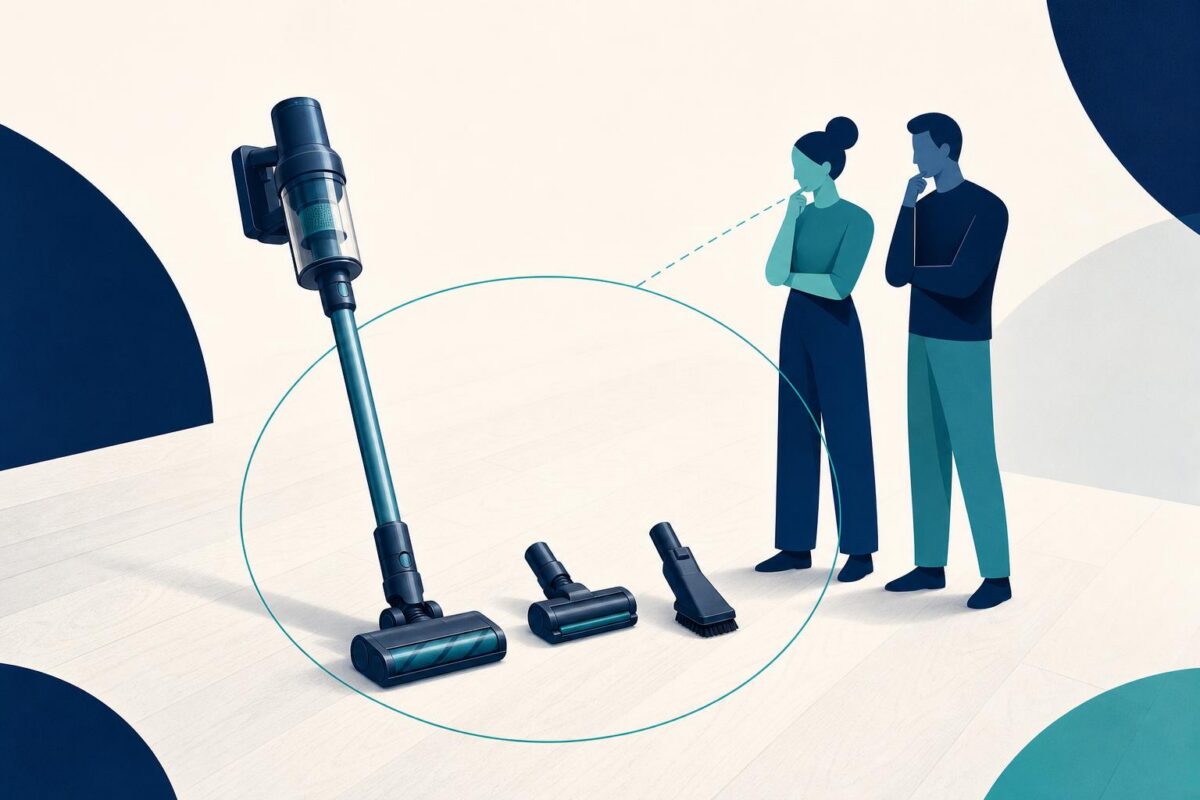
Dyson visual support has a clear prospective role when a customer describes a cleaning result without identifying the setup that produced it. Saying a vacuum is not picking up properly leaves several questions unanswered. Which appliance and accessory are involved? What surface is being cleaned? What did the customer actually observe?
That uncertainty makes Dyson a strong candidate for evaluating Viewabo. Shared visual communication can help an agent relate a complaint to the customer’s physical context. This is an independent fit analysis, not a customer case study or a claim of a relationship between the companies.
Product variety makes identification an operational task
Dyson’s March 2021 V15 Detect announcement describes a range of cordless vacuums and different cleaner heads for household cleaning needs. The relevant point is product and accessory variety. We are not adopting the release’s performance or health claims.
For support design, that variety suggests an identification step before diagnosis. An agent should establish the actual product and attachment rather than treating every cordless vacuum as the same configuration. A customer may recognize a shape more readily than a model name.
This does not mean visual recognition should replace authoritative model information. Appearance can narrow the conversation, while an accessible label or the customer’s documentation confirms identity. If the match remains uncertain, record that uncertainty before selecting a procedure or replacement item.
Understand the reported result without promising a diagnosis
The first useful question is what the customer wanted to clean. The next is what happened instead. A concern about debris left behind differs from an unexpected sound, a stopped appliance, or a damaged component. Those distinctions belong in the intake record.
An agent could ask the customer to show the relevant area from a comfortable distance. That establishes context without requiring a repeated operating demonstration. If there is damage, overheating, or another reason to stop, the conversation should move directly to the manufacturer’s appropriate support path.
Visual evidence has limits. A camera view cannot measure suction, confirm filtration performance, or reveal every internal condition. The useful promise is narrower: the team can understand which observable situation it is discussing before making a consequential decision.
Use Dyson visual support to improve accessory conversations
Accessories create a distinct support opportunity. A customer may be asking about fit, intended use, or an unfamiliar part. Those questions should not automatically become a claim that the main appliance has failed.
In a proposed workflow, the agent would confirm the appliance identity and compare the visible accessory with the approved information for that model. The goal is to explain the relevant next step clearly. An agent should never declare an accessory compatible simply because two connectors appear similar.
This is where Viewabo could fit well. The customer and agent can discuss the same physical object instead of exchanging increasingly elaborate descriptions. Viewabo’s role remains high-level visual communication, not a claim of automated parts recognition or access to Dyson service systems.
Make the service decision legible
Suppose an agent decides that a concern needs further service. The handoff should identify what the customer reported, what was visible, and why ordinary guidance was not enough. That is more useful than forwarding a ticket that says poor performance with no context.
For cases resolved through explanation, record the customer’s confirmed understanding. Did they identify the intended accessory? Do they know which approved instruction applies? A useful outcome is not necessarily a technical repair. Sometimes it is a precise answer to an ownership question.
Neither outcome should be used to make unsupported claims about Dyson’s existing support quality. The scenarios here are possible workflow opportunities. Establishing the actual frequency and business value would require evidence from the company’s own support operation.
Keep the customer from becoming a repair technician
A visual conversation can tempt agents to ask for one more view. That request needs a boundary. Do not ask people to dismantle equipment beyond authorized user care, expose batteries or electrical components, or recreate an unsafe symptom for the camera.
The same discipline applies to the home environment. The support team needs the relevant appliance and cleaning context, not unrelated personal details. A customer who cannot safely or comfortably show something should have another route to assistance.
These limits make the proposed process more precise. They help agents distinguish a useful observation from an instruction that should only come from an authorized service procedure.
Measure clearer choices, not assumed savings
A Dyson visual support evaluation could begin with accessory-identification questions. Check whether agents reach a supported model match, whether customers understand the explanation, and whether the next team has enough information when escalation occurs. Also review repeat contacts and incorrect parts recommendations.
The vacuum cleaner support workflow turns that accessory identification into a structured check of the reported loss of pickup.
Do not promise lower returns or faster resolution before measuring them. Compare similar support cases and examine why an outcome changed. The business case for Viewabo should rest on observed improvements, not on the novelty of seeing a product.
For brands with a varied physical portfolio, the broader lesson is straightforward: establish the setup before interpreting the symptom. Why video belongs in customer support explains that foundation. Dyson visual support would be worth evaluating where shared context can turn an ambiguous description into a defensible next action.