
ServiceNow Lost Half Its Value This Year. The AI Platform Era Is Having a Reckoning.

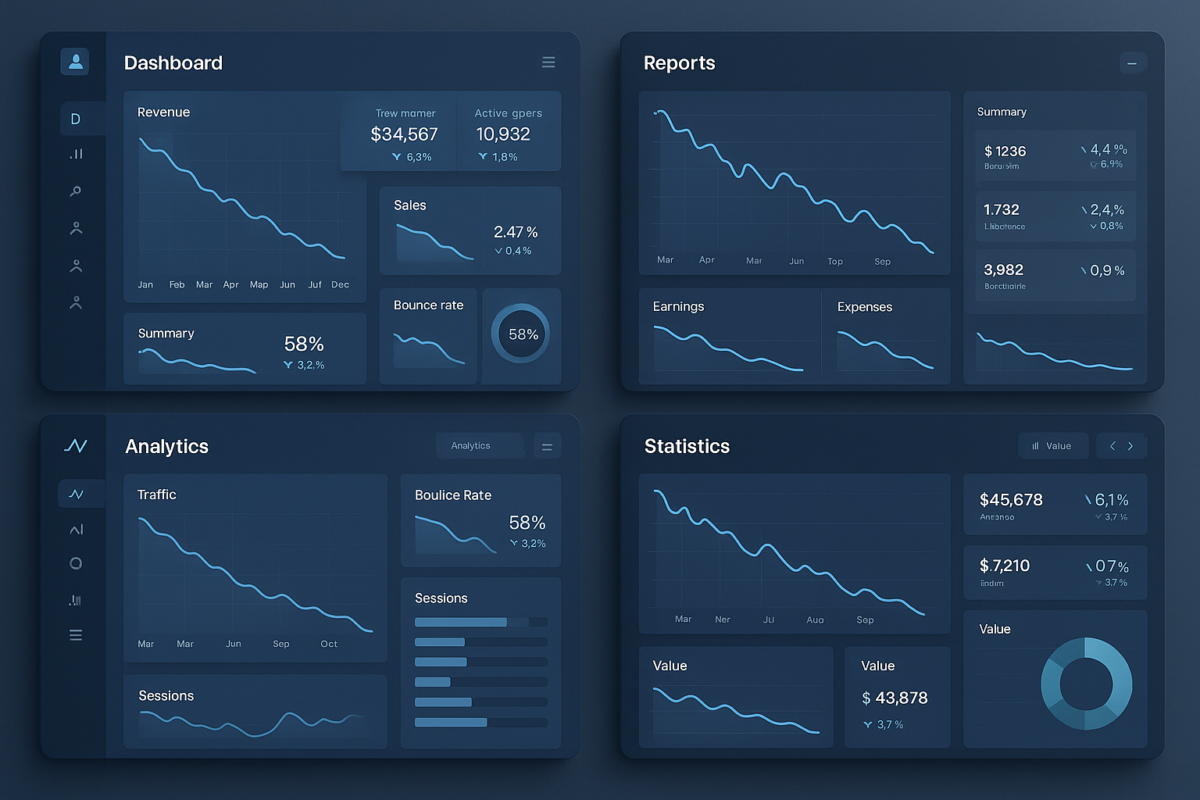
Enterprise AI Spending Is Losing Its Patience—And ServiceNow Is Paying the Price
Enterprise AI spending was supposed to be the unstoppable force of 2025. Instead, we’re watching one of the sector’s most celebrated platforms lose half its market value in a year. ServiceNow—down roughly 52% year-over-year—isn’t a fluke. It’s a symptom. Enterprise buyers are done buying the promise. They want proof that enterprise AI spending actually does something measurable, and right now, the receipts are thin.
This isn’t about ServiceNow specifically. It’s about the entire class of “AI platform” vendors who sold transformational outcomes and delivered incremental automation. The reckoning was inevitable. What’s interesting is what happens next—and what it means for how field service and support teams build their technology stacks going forward.
The Freshworks Signal: Enterprise AI Spending Must Show Real ROI
The Freshworks CEO recently said something that most enterprise SaaS executives are still too afraid to admit out loud: the pricing model is broken. As AI agents take on more actual work—not just copilot suggestions but real task completion—the seat-based SaaS model stops making sense. You can’t charge per user when one AI agent does the work of twenty.
Consumption-based and outcome-based pricing is coming fast. This matters enormously for enterprise buyers evaluating platforms right now. If a vendor is still locked into per-seat pricing with vague AI features bolted on, you’re paying for yesterday’s model with tomorrow’s price tag. Smart procurement teams are starting to pressure vendors on this directly—and vendors who can’t defend their pricing against outcome metrics are getting cut.
The shift isn’t just philosophical. It changes the evaluation criteria entirely. Instead of asking “does this platform have AI features?” the question becomes “what specifically does the AI do, how do we measure it, and what do we pay when it does more?” That’s a much harder question for bloated platform plays to answer.
Customer Contact Week 2026: AI Announcements Everywhere, Proof Nowhere
Customer Contact Week 2026 dropped a wave of AI contact center announcements. Every major vendor showed up with agent orchestration demos, autonomous resolution flows, and sentiment analysis dashboards. The booths were impressive. The ROI documentation was not.
Here’s the pattern: enterprise AI is very good at the things that were already being automated before it was called AI. Text classification. FAQ deflection. Ticket routing. These are real capabilities with real value—but they’re not the transformational outcomes that justified the platform valuations of 2023 and 2024.
What enterprise AI still can’t do is handle the physical world. When a customer’s equipment isn’t working and they can’t describe what they’re seeing, no amount of natural language processing resolves the problem. When a field tech needs to understand a configuration they’ve never encountered, no chatbot closes that gap. The hard problems in field service and technical support are visual, physical, and contextual. They require human judgment—and the right tools to support that judgment.
What This Means for Field Service Tech Stacks
The ServiceNow decline and the pricing shift create a rare moment of clarity for field service and support leaders. Platforms that justified their cost through “AI-powered everything” are now being measured against actual outcomes. And the ones that survive will be the ones that do specific things demonstrably well.
That’s the right framework to apply to your entire stack. Not “does this vendor have AI?” but “what does it solve that we couldn’t solve before, and how do we prove it?”
For visual and physical support problems—the kind where a customer is staring at a broken device, a malfunctioning installation, or an error state they can’t describe in words—the answer isn’t a larger language model. It’s giving your support agents the ability to see exactly what the customer sees, in real time. That’s a different category of problem entirely. And it’s one where the ROI calculation is actually simple: fewer truck rolls, faster resolutions, higher first-contact resolution rates.
The AI platform era taught buyers to think expansively about what software could do. The reckoning is teaching them to think precisely about what software actually does. That’s a healthier place to be.
Stop Paying for AI Platform Promises You Can’t Audit
Enterprise AI spending is not going away. The overall investment is still growing. What’s changing is the tolerance for opacity. Buyers who accepted “AI-powered” as a sufficient explanation in 2023 are now asking for specifics: What tasks does the AI complete? What does it cost per task? What’s the fallback when it fails? How do we measure improvement over baseline?
ServiceNow’s stock decline is the market’s version of those questions. Institutional investors ran the same audit that enterprise procurement teams are running internally—and reached the same conclusion. The platform premium requires platform-level proof.
For support and field service leaders, this creates a window. Your CFO and CTO are now aligned on ROI scrutiny. That makes it easier to retire tools that never justified their cost and double down on ones that do specific, measurable things well. It also makes it harder for platform vendors to upsell you on AI features that don’t integrate cleanly into actual workflows.
The vendors worth keeping in your stack right now are the ones that solve a specific problem better than anything else and can prove it with data. Everything else is just spending—and enterprise AI spending is finally being held to account.
The Visual Gap That AI Still Can’t Close
One final point worth making clearly: the AI contact center wave addresses a real set of problems. Text-based support, high-volume repetitive inquiries, basic triage—these are areas where AI genuinely reduces cost and improves speed. The vendors who focus here and deliver measurable outcomes will survive and grow through this reckoning.
But there’s a category of support interaction that AI makes more obvious, not less necessary: the moment when a customer can’t describe what they’re seeing, and a text-based exchange becomes a dead end. These moments are expensive. They drive repeat contacts, escalations, and truck rolls. They’re the reason field service organizations still struggle with first-contact resolution rates even as they invest heavily in AI tooling.
Solving that problem requires seeing what the customer sees. Not a better chatbot. Not a more sophisticated routing algorithm. A live visual connection between the customer and the agent—the core of what Viewabo was built to do.
As enterprise AI spending gets more disciplined, the tools that do one thing extremely well are going to look better and better compared to the platforms that promised everything and delivered averages. That’s not a prediction. It’s already happening.
ServiceNow is just the most visible proof point so far.