
First-Visit Resolution Didn’t Get Worse Because You Hired the Wrong Techs

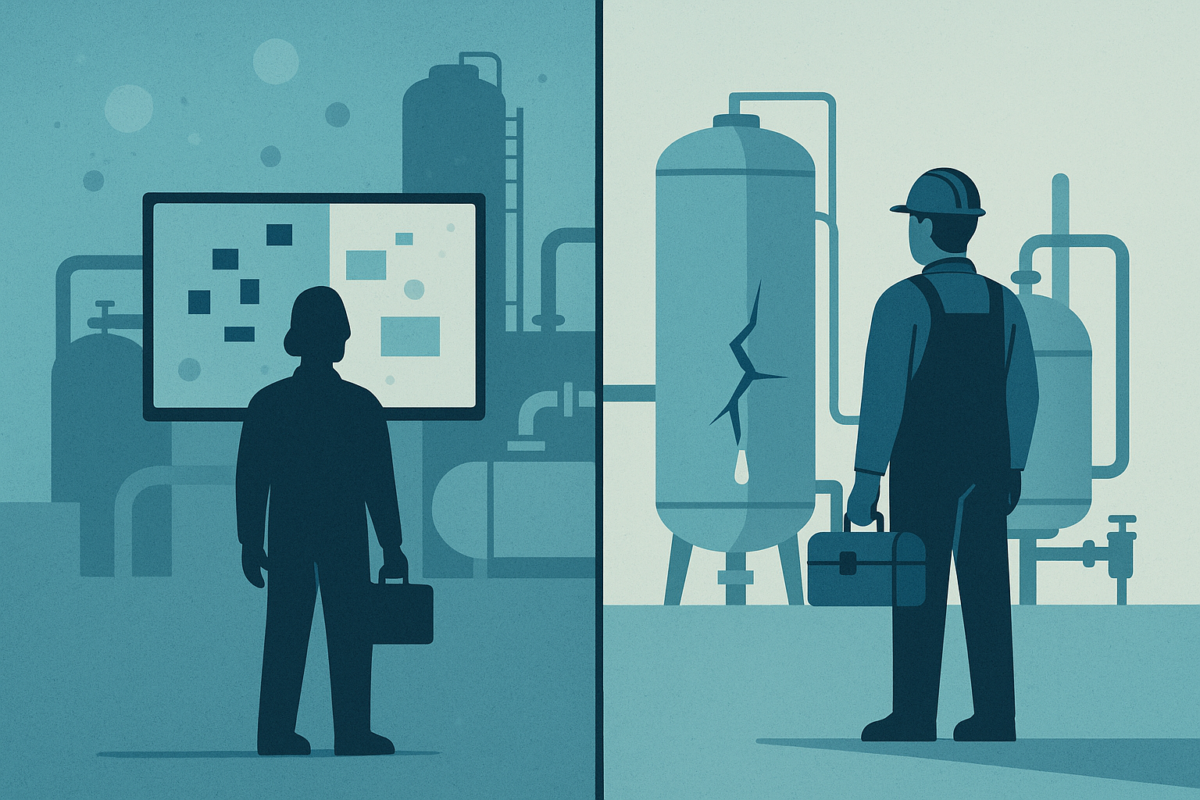
When field service organizations see their first-visit resolution rates plateau — or worse, slip — the instinct is to look at the people. Hire better technicians. More training. Tighter certifications. It feels logical: if a tech keeps coming back for second visits, something must be wrong with the tech.
That instinct is wrong. And it’s costing companies real money.
The First-Visit Resolution Myth: Blaming the Technician
First-visit resolution is one of the most watched KPIs in field service. When it’s low, the diagnosis almost always starts with workforce quality. Companies pour money into recruiting, apprenticeships, manufacturer training programs, and competency frameworks. They build elaborate technician-to-job matching algorithms. They optimize routing to put the “right” tech on the “right” ticket.
And the numbers don’t move.
The reason they don’t move, however, is that technician skill is rarely the binding constraint. Most field service teams have competent technicians. What they don’t have is information. The tech who shows up at a commercial HVAC unit, a malfunctioning production line, or a leaking water heater typically knows everything about how that category of equipment works in theory. What they don’t know is what this equipment, at this site, is doing right now.
They’re walking in blind.
What Actually Causes Repeat Visits
Think about what a dispatch ticket typically contains: an address, an asset ID, maybe a customer complaint description written by someone who isn’t technical. “Unit making noise.” “System not cooling.” “Intermittent fault.”
None of that tells a technician what they’re about to see. It doesn’t tell them whether the problem is electrical or mechanical, which specific component failed, or what parts they’ll need. There’s no visual of the installation — whether there’s a non-standard configuration, an access issue, an obvious physical damage signature.
So the tech loads the truck with a reasonable guess of what they might need. After a 40-minute drive, they arrive on site. They look at the equipment — and discover the actual problem is something different from what the ticket described. The part they need isn’t on the truck. The repair is going to require a specialist tool they left at the depot. They need to call the office, reschedule, order parts.
In other words, that’s not a hiring failure. It’s an information failure. And no amount of technician quality improvement changes the fundamental problem of showing up without knowing what you’re walking into.
Why AI Scheduling and Routing Don’t Fix It
The field service software market is booming. Workforce management platforms, AI-powered scheduling engines, predictive maintenance tools — the category has attracted billions in investment over the past decade. HCLTech, Google Cloud, and ServiceNow just announced a major three-way alliance to bring Gemini Live directly to field technicians, which is a significant validation that the industry recognizes this problem.
But here’s the thing: most of these tools are solving the logistics problem, not the information problem.
AI scheduling optimizes for technician availability, travel time, and skill-to-ticket matching. That’s genuinely useful. But the optimization happens on variables the system can measure — who is available, where they are, what certifications they hold. It cannot optimize for the one variable that matters most at the job site: what does the actual problem look like?
You can route the most skilled, best-certified technician to a site in record time. If they still don’t know whether the leak is at the fitting or the valve body, they’re still going to show up with the wrong parts.
What “Information Before Arrival” Actually Looks Like
The companies that have genuinely moved their first-visit resolution numbers have done something different. They’ve found ways to give technicians eyes on the problem before they leave the depot — or at minimum, to give a specialist eyes on the problem during the visit to guide the repair in real time.
This looks like a customer or on-site contact using a phone to show the service team what the equipment is doing before a tech is dispatched. It looks like a remote expert watching live video as a tech works through a diagnostic, saying “look at the fitting on the left — there, that’s the issue” instead of letting the tech spend 25 minutes ruling out possibilities one at a time.
It looks like visual information flowing into the decision-making process, not just text descriptions of symptoms.
The moment someone with eyes on the problem can communicate that picture to the person making dispatch decisions — or to the tech performing the repair — the guesswork collapses. As a result, parts accuracy goes up. Diagnostic time goes down. And first-visit resolution follows.
The Real Path to First-Visit Resolution Improvement
Ultimately, the companies winning on FVR aren’t necessarily the ones with the most sophisticated AI stack. They’re the ones who have closed the visual information gap between the customer and the technician.
That means investing in ways to see problems remotely before and during service visits. It means building workflows where a visual assessment can happen before a truck rolls, so the right tech with the right parts shows up instead of the available tech with a reasonable guess. It means giving your remote experts the ability to guide field technicians through their eyes, not just their words.
Viewabo is built for exactly this — connecting remote visibility to the people who need it, at the moment it matters.
If your first-visit resolution rate hasn’t responded to better hiring, more training, or smarter scheduling, stop looking at the technicians. Look at what they know — and don’t know — when they walk through the door.
That’s the lever. Pull it.