
Industrial Pump Support Needs Installation Context

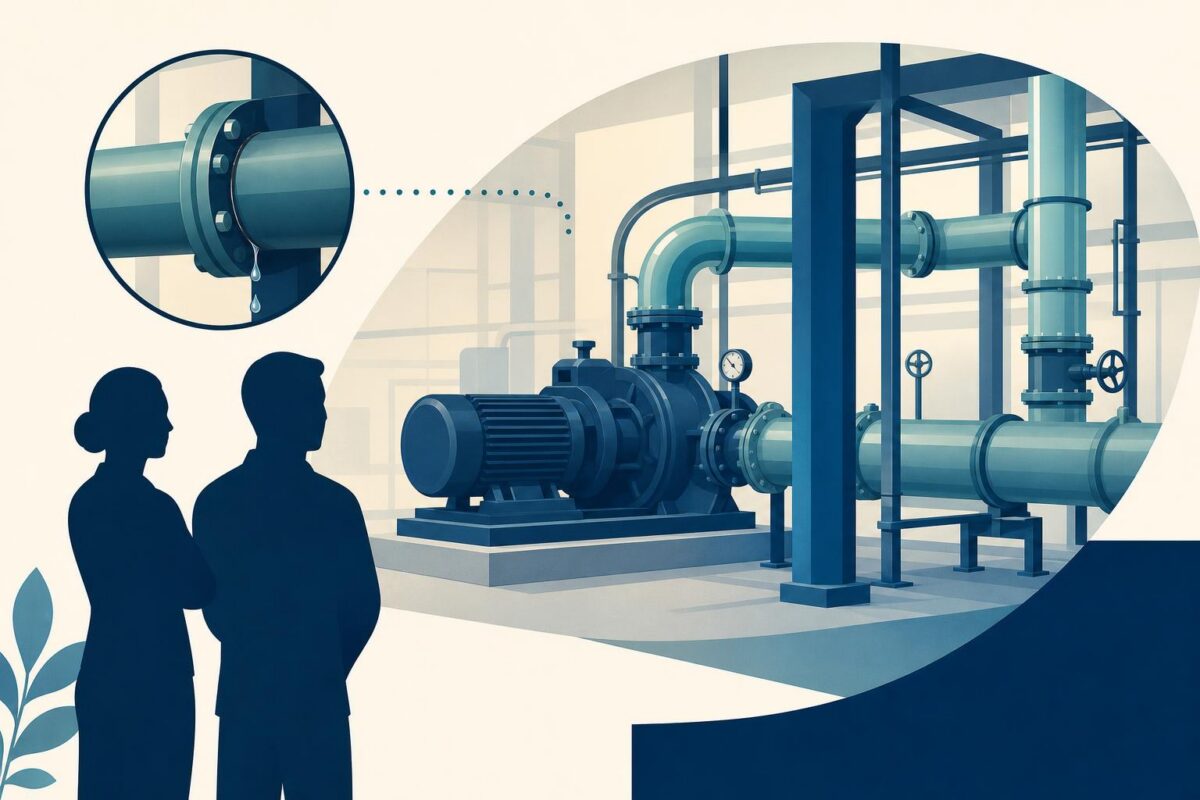
Industrial pump support can lose time before anyone reaches the technical question. The caller describes a leak near "the blue pump." The service team needs an asset identity, a process context, and a safe description of what changed. Without those details, even an experienced specialist starts by reconstructing the scene.
Viewabo can help people on both sides of the conversation see the same installation. The objective is a clearer service intake. It is not remote permission to dismantle equipment, handle unknown fluids, or continue operating through a hazardous condition.
Identify the pump and its job
First, establish which asset is involved and what role it serves. Facilities may have several similar units or a duty-and-standby arrangement. A correct location alone may not identify the equipment that needs attention.
Use existing asset labels and documentation when they are safely accessible. Note whether the reported symptom concerns the pump, nearby piping, the base area, or another component. Do not merge those locations into one unsupported diagnosis.
Next, ask what operation the customer cannot complete. Reduced process availability, an unusual visible condition, and a maintenance concern are different service needs. Understanding the consequence helps set the next step without inventing the cause.
Describe the condition without interpreting the fluid
A wet area provides information, but it does not identify a fluid or its source. Ask the site to follow its established spill and safety procedures. Do not request touching, smelling, collecting, or tracing an unknown substance for the sake of a support call.
From a safe location, the caller may be able to show where the condition is visible relative to fixed equipment. A broad view is often more useful than an isolated close-up. It preserves the relationship between the reported symptom and the installation.
Record what the site knows separately from what it suspects. "Liquid observed beside asset P-12" is different from "the pump seal failed." The latter belongs in the record only when a qualified assessment supports it.
The equipment commissioning handoff is an opportunity to preserve the installation facts that later pump troubleshooting will need.
Build industrial pump support around the operating history
Ask when the symptom first appeared and whether the unit was operating at the time. Note recent work, changes in service, and relevant recorded alarms. Keep the wording factual so the history remains useful across vendors and departments.
A complaint after planned maintenance does not establish that the maintenance caused it. Similarly, an older pump is not automatically beyond repair. Support needs a sequence of events, not an argument for a preferred outcome.
If measurements are available, preserve their source and conditions. Do not estimate vibration, temperature, pressure, or flow from a picture. The visual discussion can help identify where measurements belong, but it cannot supply them.
Respect the boundary around energized equipment
Pumps can involve electrical, mechanical, pressure, and process hazards. OSHA's revised 2002 hazardous-energy publication is relevant background for the service boundary. Actual work must follow the applicable site and manufacturer procedures.
That means the call should never encourage removing guards, loosening connections, or opening equipment to obtain a clearer view. Nor should support request a restart merely to make a symptom visible. The authorized site team controls the operating state.
If the information requires qualified access, say so in the service brief. An honest missing observation is more useful than a risky improvisation or a confident guess.
Arrange service with the installation in mind
The installation can shape the service plan even before diagnosis. Access restrictions, nearby operations, asset ownership, and required escorts all affect how a technician can work. Collect those details without asking the customer to redesign the work area.
Also establish who owns connected systems. The pump vendor may not be responsible for surrounding pipework or process controls. A shared physical view can make those boundaries easier to discuss before several parties arrive with different assumptions.
The next action should name the question to resolve. It might be inspection by the qualified maintenance team, review of existing records, or a specialist visit. Explain why that action fits the evidence and what information it should produce.
Verify service against the original need
When authorized work is complete, return to the customer's operating requirement. A dry-looking floor or a running motor does not by itself prove that the process has recovered. Use the site's approved checks and responsible personnel to establish the outcome.
Keep any restrictions or pending measurements explicit. If the unit has not returned to the relevant operating condition, distinguish service completion from performance verification. Assign someone to own that final check.
Viewabo fits this workflow where physical uncertainty is making communication harder. It can help the customer show the installation and help the expert ask more precise questions. Start with that limited, useful purpose: a service brief that identifies the right asset, explains the observed condition, and sets a responsible next action.
Background reference: Control of Hazardous Energy, OSHA 3120.
Related reading: why video belongs in customer support.