
Loading Dock Equipment Support: Scope the Fault Safely

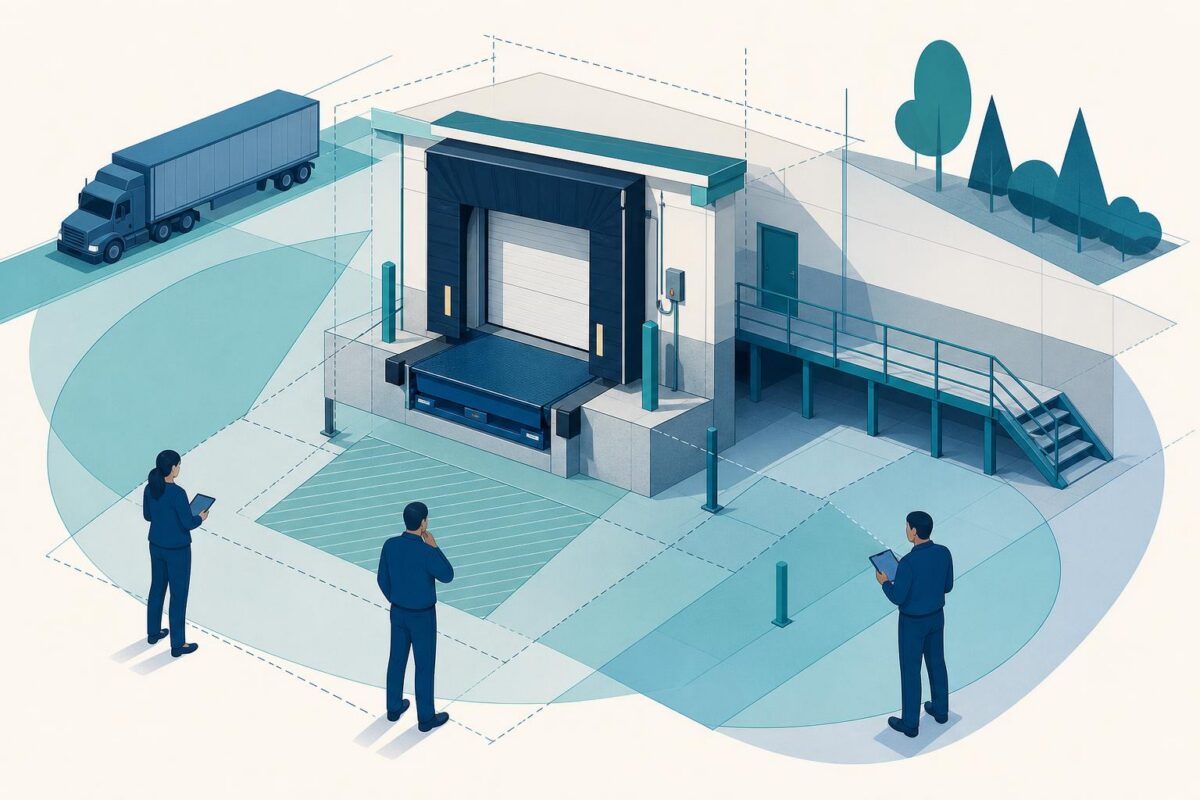
Loading dock equipment support has to account for the work happening around the fault. A service request may involve a leveler, restraint, door, or another component, while trucks and warehouse traffic continue nearby. The technician needs more than a vague description of "the dock problem."
Viewabo can help an authorized site contact explain the physical arrangement from a safe position. The purpose is to identify the affected equipment and prepare a useful service handoff. It is not remote permission to operate damaged equipment, enter a restricted area, or test a protective system.
Name the affected asset before arranging service
First, identify the dock position and the particular equipment involved. A dock number alone may cover several assets maintained by different providers. Use existing labels and site records to avoid sending the wrong specialist.
Ask what the caller observed, not what they think failed internally. A reported operating interruption, an externally visible condition, and a warning indication are separate pieces of evidence. Keep them separate in the case.
Also identify the current status determined by the site's procedures. If the position is unavailable, document who controls access and how the service provider should coordinate arrival. Support should not independently change that operating status.
Give loading dock equipment support the site context
A broad view from an approved position can help the expert understand the relationship between the equipment, building opening, and traffic area. It may explain why an apparently simple service task needs additional coordination.
Do not ask the caller to stand near an unprotected edge, walk into active traffic, or enter the equipment's movement area. If a useful view is unavailable safely, describe the limitation and arrange qualified inspection.
OSHA's revised 2002 hazardous-energy guidance provides relevant background for servicing boundaries. A support conversation does not replace the controls that apply to inspection and maintenance work.
Preserve the sequence of the reported event
Ask when staff first noticed the condition and whether it followed a known operation or authorized service activity. Use confirmed records where possible. The event history should not become an accusation against a driver, operator, or contractor without evidence.
If a vehicle was present, record only the information appropriate to the site's service process. The equipment specialist may need the operating context, not unrelated shipment or personnel details.
Likewise, distinguish a firsthand observation from a later report. A technician should know whether someone actually saw the sequence or discovered the condition afterward. That difference affects which questions remain open.
Plan the work window, not just the appointment
A loading dock is part of a live logistics operation. The service provider needs to know who can coordinate access and any required work window. The site, not the remote support agent, determines how to manage traffic and isolate the work area.
Confirm whether another provider or facilities representative must attend. A fault reported at the opening may involve several responsibilities. It is better to establish those boundaries before the technician arrives.
The support brief should also note relevant documentation and who holds it. Missing equipment identification or service history can slow an otherwise well-planned visit. Make those gaps visible while there is still time to resolve them.
Turn the observation into a focused service question
The next action should establish something specific. The qualified technician may need to inspect the reported condition, verify the equipment identity, or determine what further work is necessary. Support should not promise a routine adjustment based on an incomplete view.
Separate the customer's operating need from the technical conclusion. The site may urgently need the dock position available, but urgency does not prove that the equipment can return to use. A clear update should explain both the need and the remaining assessment.
Automotive lift support offers another example of keeping safe external intake separate from qualified inspection and authorization to return equipment to use.
Keep one case owner across the handoffs. Warehouse staff should not have to repeat the event history to every vendor. A shared factual brief makes coordination more useful than a chain of increasingly confident guesses.
For sites with repeated dock layouts, ask the contact to confirm the position from the same side used in the service record. An interior bay number and an exterior driver reference may differ. Resolving that mismatch before dispatch prevents a technician from inspecting a neighboring asset with no reported problem.
Verify return to operation through the responsible process
After authorized work, the qualified parties should determine and perform the required checks. A component that moves or an indicator that changes is not, by itself, a complete release decision.
Document exactly what the service provider confirmed and any remaining restriction. If another inspection or approval is pending, preserve that status. The final handoff should make it clear who decides when normal activity can resume.
Viewabo fits when physical context is hard to communicate and better visibility can improve service planning. Start with asset identification, a neutral event history, and safe access information. The goal is a prepared specialist and an accurate decision, not a remote substitute for the people responsible for dock safety and equipment service.
Background reference: Control of Hazardous Energy, OSHA 3120.
Related reading: why video belongs in customer support.