
Parcel Complaint Resolution Should Not Be Homework

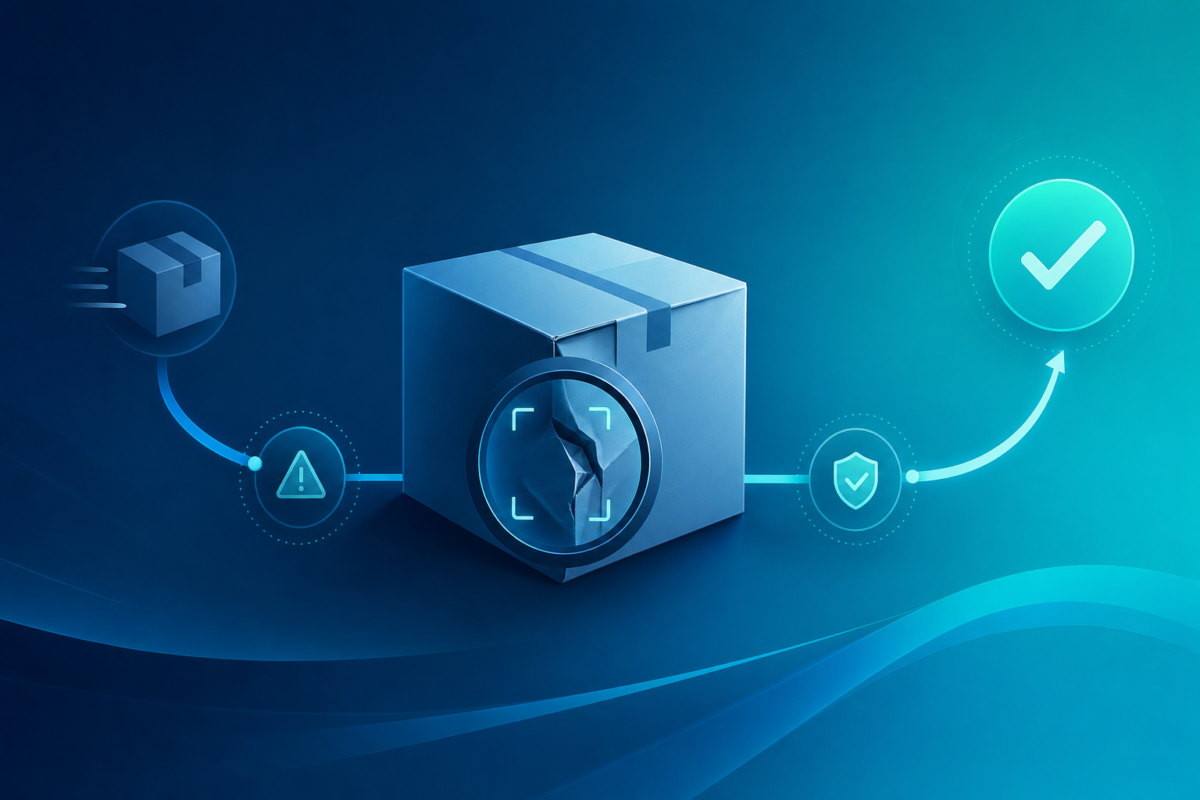
Parcel complaint resolution often fails for an uncomfortable reason: customers must work too hard to prove something went wrong. The missing or damaged delivery causes frustration. However, the greater loss of trust often begins when support demands repeated explanations, duplicate photos, and information the company already holds.
On October 12, Ofcom released its official survey covering parcel delivery experience and associated complaint handling. The release appears on Ofcom’s 2026 statistical release calendar. The survey’s scope deserves attention because delivery performance and complaint handling belong to the same customer experience.
A delivery failure may happen once. A poor complaint process makes the customer experience that failure again at every step.
The complaint process creates a second failure
Companies tend to treat a missing, damaged, or incorrect parcel as an operational exception. The customer sees something broader. They see a company deciding whether to believe them.
That decision becomes visible through the questions support asks. What was in the parcel? When did it arrive? Was the box open? Can you send a photo? Can you send another photo with the label visible? Have you contacted the carrier? Can you repeat the tracking number?
Some questions are necessary. However, the sequence often reflects internal fragmentation rather than a genuine need for more evidence.
For example, the retailer has the order record. The carrier has the scan history. The support system has the customer’s first message. Still, the customer becomes the integration layer between them.
That is a bad operating model. It converts internal uncertainty into customer labor.
Parcel complaint resolution needs one evidence request
Support teams should decide what evidence they need before asking the customer for anything.
For a damaged parcel, that may include the outer packaging, shipping label, internal protection, and damaged item. For a delivery dispute, it may include the delivery location and any proof supplied by the carrier. The exact requirements will vary. The principle should not.
Ask once. Capture the evidence in a usable form. Then keep it attached to the case.
Likewise, customers should not need to upload the same image through a form, email it to another department, and show it again during a later conversation. Each repeated request tells the customer that nobody owns the information.
Good parcel complaint resolution starts with a structured intake. The agent should know which facts the company already has and which facts remain unknown. Therefore, the request can focus only on the missing evidence.
This approach also protects support teams. Complete evidence reduces internal debate and helps the next person act without restarting the investigation.
Visual support should reduce customer effort
Photos help, but static uploads often create another round of questions. The image may hide the damaged area. The label may be unreadable. The customer may photograph the item but not the packaging.
Therefore, a short visual support session can resolve that uncertainty immediately. The agent can guide the customer to show the relevant surfaces, label, seal, contents, or delivery location. Meanwhile, the customer receives confirmation that the evidence is sufficient.
In this case, the goal is not to inspect everything. The goal is to collect the minimum evidence needed for a fair decision.
That distinction matters. Remote visual support should shorten the resolution path, not create a more elaborate inspection ritual. If a live session produces ten screenshots that nobody reviews, the company has added process without improving the outcome.
As discussed in our post on visual return verification and stricter policies, visual evidence can help companies verify claims without making legitimate customers absorb the cost of tighter controls.
The same principle applies to parcel complaint resolution. Verification should produce a decision. Otherwise, it becomes surveillance without service.
Give one person ownership of the outcome
Evidence alone does not resolve a complaint. Someone must own the next action.
Parcel cases often cross several organizational boundaries. Customer support contacts fulfillment. Fulfillment checks warehouse records. The carrier reviews scans. Finance may approve a refund. Meanwhile, the customer receives status updates but no resolution.
As a result, a named complaint owner prevents that drift.
Still, the owner does not need to perform every task. However, that person must remain responsible for moving the case forward, communicating with the customer, and closing the loop. Internal teams can investigate in parallel without sending the customer from one queue to another.
Ownership also requires authority. If the evidence clearly supports a replacement or refund, the owner should not wait for three layers of approval. Companies should set practical limits and escalation rules in advance.
Without authority, “ownership” becomes another label in the support system.
Verification needs a visible resolution path
Customers tolerate investigation when they understand what will happen next.
Tell them which evidence you need, why you need it, and when they can expect a decision. Then explain the available outcomes. Those outcomes might include a replacement, refund, redelivery, carrier investigation, or another defined remedy.
Avoid vague language such as “We have passed this to the relevant team.” That sentence describes internal motion, not customer progress.
Instead, make the next checkpoint specific. For example: “We have everything needed to review your claim. Your case owner will confirm the outcome by 3 p.m. tomorrow.”
Then meet that commitment.
Moreover, if the investigation takes longer, the owner should contact the customer before the deadline. Silence forces the customer to chase the company, which adds more work to an already poor experience.
Measure the work imposed on customers
Most support dashboards measure response time, handling time, and case closure. Those metrics help manage capacity. However, they do not reveal how difficult the complaint felt.
Teams should also track repeated contacts, duplicate evidence requests, transfers, reopened cases, and missed commitments. In addition, review how many times a customer must explain the same event.
As a result, these measures expose friction that average resolution time can hide.
A case may close within the target window while still requiring four contacts and two uploads. Operationally, the ticket looks successful. From the customer’s perspective, the company made a simple failure exhausting.
Therefore, leaders should review complaint journeys, not only final dispositions. Look for every moment when the customer must compensate for a broken handoff or incomplete record.
Make recovery easier than the failure
Delivery problems will happen. Packages get damaged, misplaced, delayed, or left in the wrong location. Customers understand that operations are imperfect.
What they do not accept is a company that turns its own failure into their administrative burden.
Strong parcel complaint resolution captures evidence once, assigns one owner, and connects verification directly to a remedy. It gives the customer a clear timeline and preserves context across every handoff.
The original delivery problem may be outside the support team’s control. The work required to recover from it is not.