
Remote Repair Diagnosis Is the Real Right to Repair

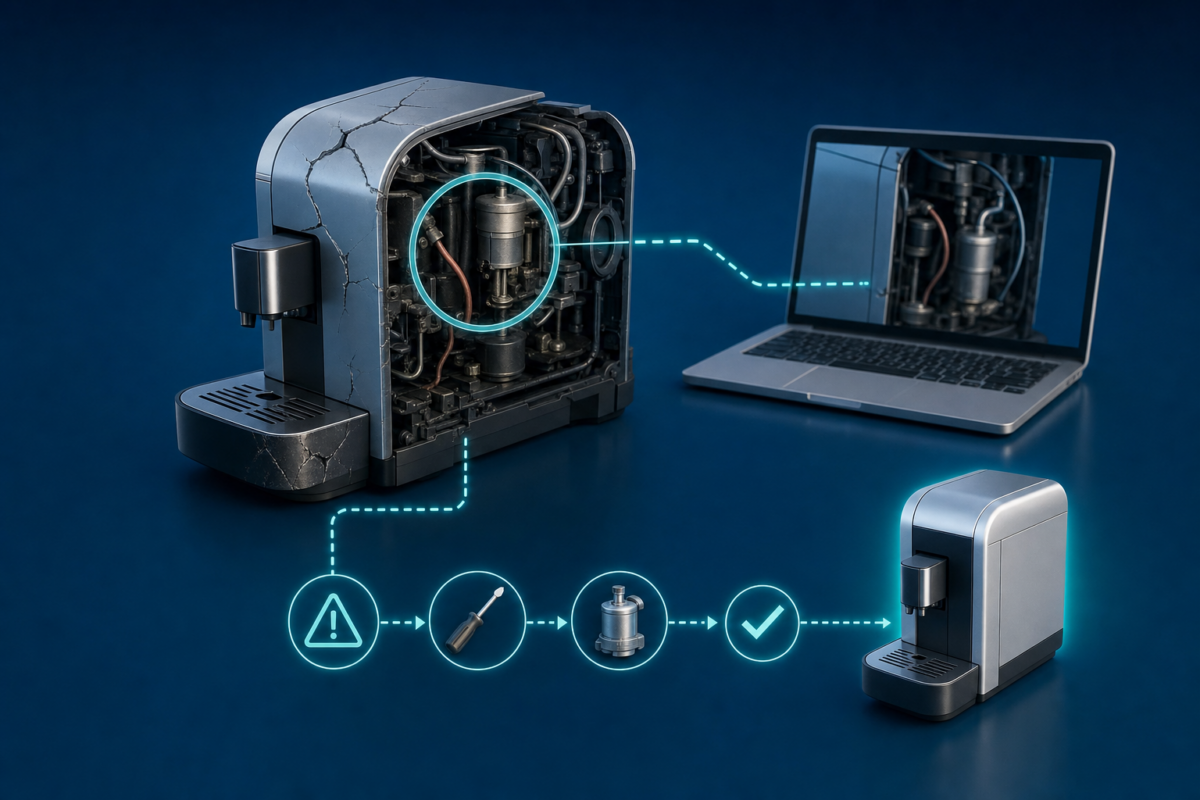
Right to repair will expose how bad most companies are at diagnosis. Remote repair diagnosis is the missing operating layer. Without it, a manufacturer can publish repair prices, stock spare parts, and promise a reasonable timeline while still making the customer wait through avoidable shipping, repeat calls, and failed visits.
The European Union’s new repair rules sharpen that problem. Since July 31, member states must apply rules that let consumers request repair for covered products. Manufacturers must complete that repair within a reasonable time and at a reasonable price. They must also make service information and typical prices easy to find. The European Commission says the rules cover products such as washing machines, vacuum cleaners, mobile phones, and tablets.
That sounds like a legal change. For support leaders, it is an operating test.
Remote Repair Diagnosis Comes Before the Repair
Most repair processes begin too late. A customer describes a symptom in a form. An agent maps it to a broad issue code. Then the company ships the product, sends a technician, or orders a likely part. Only after the item reaches skilled hands does anyone truly inspect it.
That sequence creates waste long before a wrench turns. The wrong part travels. A technician arrives without the right tool. A repair center receives a product that could have been fixed with a simple adjustment. Meanwhile, the customer hears that the case is “in progress.”
Remote repair diagnosis changes the starting point. A support agent or technician can see the product, guide the customer to the relevant panel, capture the model and serial number, and observe the failure in context. As a result, the team can decide what kind of repair is actually needed before choosing the route.
This is not about asking customers to become technicians. It is about letting the technician inspect before the company commits labor, parts, and time.
A Reasonable Timeline Starts at First Contact
The phrase “reasonable time” will become a trap for companies that measure only bench time. Customers do not separate diagnosis from repair. Their clock starts when they ask for help.
If support spends four days collecting photos by email, two days confirming a model number, and another week sending the wrong part, a fast physical repair does not rescue the experience. The internal dashboard may show a two-hour job. The customer experienced a two-week failure.
Therefore, remote repair diagnosis should be part of the service-level definition. Track time to visual inspection. Track time to a confident repair path. Track the percentage of dispatched visits that arrive with the correct part. Those measures reveal whether the repair operation is moving or merely transferring the case.
Support teams already know this pattern. The knowledge article often covers every standard problem except the one in front of the customer. A live view closes that gap because the agent can test the article against the actual product instead of forcing the product into a generic script.
The Repair Quote Is Only as Good as the Diagnosis
The EU rules also push manufacturers to make typical repair prices accessible. Price transparency is useful, but a published price range can become another source of frustration when the company lacks evidence about the fault.
A vague diagnosis produces a defensive quote. The manufacturer adds margin for uncertainty, or it gives an attractive estimate that collapses after inspection. Neither builds trust.
Remote repair diagnosis narrows the uncertainty before the quote. The team can distinguish a loose connection from a failed component. It can see whether damage is cosmetic, mechanical, or environmental. It can also identify cases where safe remote guidance solves the issue without a shipment.
Better evidence makes the price more credible. It also makes the handoff cleaner. The repairer receives a record of what the customer showed, what support tested, and why the team chose the repair path. Consequently, the customer does not need to restart the story at every stage.
Do Not Turn Visual Support Into Another Queue
Adding video support does not fix a broken process by itself. I have seen teams treat a visual session as a premium escalation after email and phone have already failed. That preserves the old delay and adds another handoff.
Instead, define visual triggers at the front line. Use remote repair diagnosis when the symptom is physical, when part selection depends on visible evidence, or when the customer cannot describe the location of the fault. Give agents permission to start the session while the case is still fresh.
Next, require a useful outcome. Every session should end with one of a few clear decisions: guided fix, parts shipment, depot repair, field visit, or safety stop. The recording or captured evidence should travel with the case. Otherwise, the next person repeats the inspection.
The repair-or-replace workflow makes the practical next decision explicit once the available diagnosis is clear.
Finally, audit the misses. When a technician discovers a different fault, compare the physical finding with the remote diagnosis. That feedback improves prompts, training, and routing rules. Accuracy matters more than session volume.
Right to Repair Will Reward Operational Honesty
The uncomfortable part of right to repair is that companies can no longer hide a weak service operation behind a replacement policy. Replacement forgives poor diagnosis. Repair exposes it.
Manufacturers now have a reason to connect customer support, parts planning, depot operations, and field service around a shared view of the problem. Remote repair diagnosis provides that view early enough to matter.
The winners will not be the companies with the longest repair manuals or the most polished policy page. They will be the ones that can look at a broken product, decide what it needs, and send the case down the right path on the first try.
That is the real right to repair: not permission on paper, but a service operation capable of delivering the fix.