
Self-Service SaaS Conversion: Why Most Trials Never Pay (And the Fix)

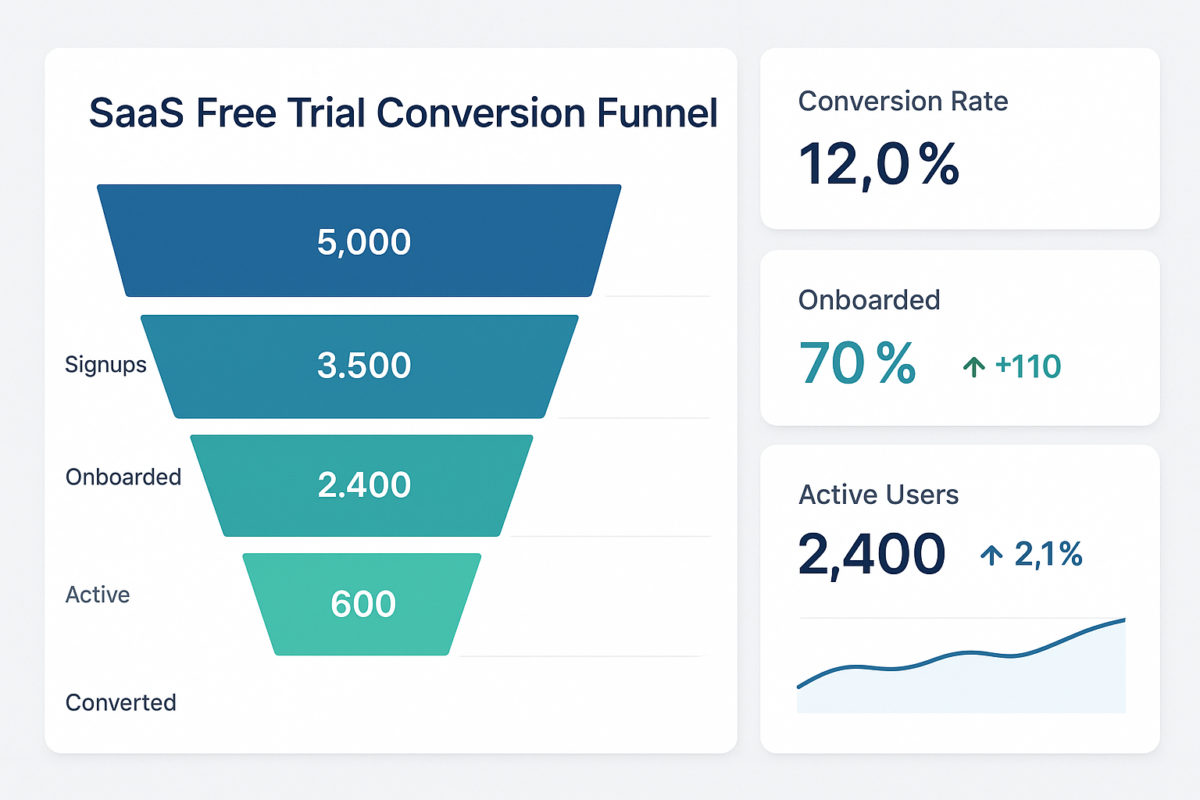
Furthermore, the average trial-to-paid conversion rate for self-service SaaS is 15-25%. This is especially relevant when thinking about self-service SaaS conversion. (Source: OpenView research)
Additionally, most companies are nowhere near it.
In fact, i’ve been studying this for months, because we just launched self-service at Viewabo. No more “contact sales.” Just sign up, try it, pay if you like it. The whole point is to let the product sell itself.
Furthermore, that is the theory. The reality requires getting a few things right that most founders underestimate.
The Three Things That Kill Self-Service Conversion: Understanding self-service SaaS conversion
1. Time to value is too long
Additionally, importantly, the most important metric in self-service SaaS is not your conversion rate. It is your time-to-first-value.
Also, notably, how long does it take from “I signed up” to “I got the result I came for”?
Indeed, if that number is measured in days, your conversion rate will be single digits. If it is measured in minutes, you have a chance.
Furthermore, this is not about onboarding checklists or welcome emails. Those help. But the core question is: can a user accomplish the thing they signed up to accomplish in under 10 minutes, without talking to anyone?
Additionally, for most products, the honest answer is no. The setup is too complex. Additionally, the defaults are wrong. The first experience requires too much configuration before you can see the value.
The fix: build the happy path so well that no one needs to read the docs. The best onboarding is no onboarding at all.
2. The upgrade moment is buried
Furthermore, most trial experiences end with a whimper. The trial expires. A wall appears. The user is confused, mildly annoyed, and slightly motivated to look at competitors.
Moreover, that is not an upgrade moment. That is a churn trigger.
In addition, the upgrade moment should happen when the user is experiencing the most value from your product, not when they have hit a wall. The best time to ask someone to pay is right after they have used the product and gotten a result they care about.
Practically, this means your upgrade prompt should appear:
– Right after a successful first session
– When the user has accomplished something meaningful
– With a framing that connects the price to the value they just got
“You just did X for the first time. Want to keep doing it? Here is what it costs.” That converts. “Your trial expires in 3 days” does not.
3. Pricing is unclear or scary
The third killer is simpler than you think. Users are ready to pay. Then they go to your pricing page.
And they get confused.
Four tiers. Twenty-three features. A toggle between monthly and annual that shows different numbers. A “most popular” badge on the middle tier that nobody believes.
Confusion kills conversion. The user does not make a decision. They close the tab and tell themselves they will come back.
They do not come back.
The fix: three tiers maximum. Prices visible without a calculator. An obvious answer to “which one should I get?” One clear CTA per tier. No jargon.
What the Numbers Say
Appcues benchmarked 2,200 SaaS companies. Median trial-to-paid: 14%. Top quartile: 25%+. The difference between median and top quartile is almost entirely explained by time-to-value and pricing clarity. Feature depth does not move the number.
Lenny Rachitsky’s research on PLG companies shows that the fastest-converting products have one thing in common: users reach a meaningful outcome before they are asked to pay. The moment of conversion is a yes-or-no decision on whether to keep getting that outcome, not a decision about whether the product has enough features.
The Self-Service Paradox
Here is the uncomfortable truth about self-service SaaS.
When you remove the sales team, you remove the person who was compensating for your product’s weaknesses. The sales rep who walked every new user through the demo and answered every objection is no longer there to paper over a confusing onboarding flow or an unclear pricing page.
Self-service forces you to fix the product. That is the point.
If your trial-to-paid rate is low after going self-service, the problem is not your go-to-market motion. It is your product experience. Self-service just made the problem visible.
The companies that do this well treat their trial experience like a product. They run experiments on it. Additionally, they watch session recordings. They obsess over the moment a user first “gets it.” They shorten the path to that moment by weeks, then days, then minutes.
That is what self-service conversion is really about.
George Cheng is the founder of Viewabo, remote visual support software for teams that need to see what their customers are seeing. Viewabo launched self-service in April 2026.