
SharkNinja Visual Support: Identify the Accessory Before Giving Advice

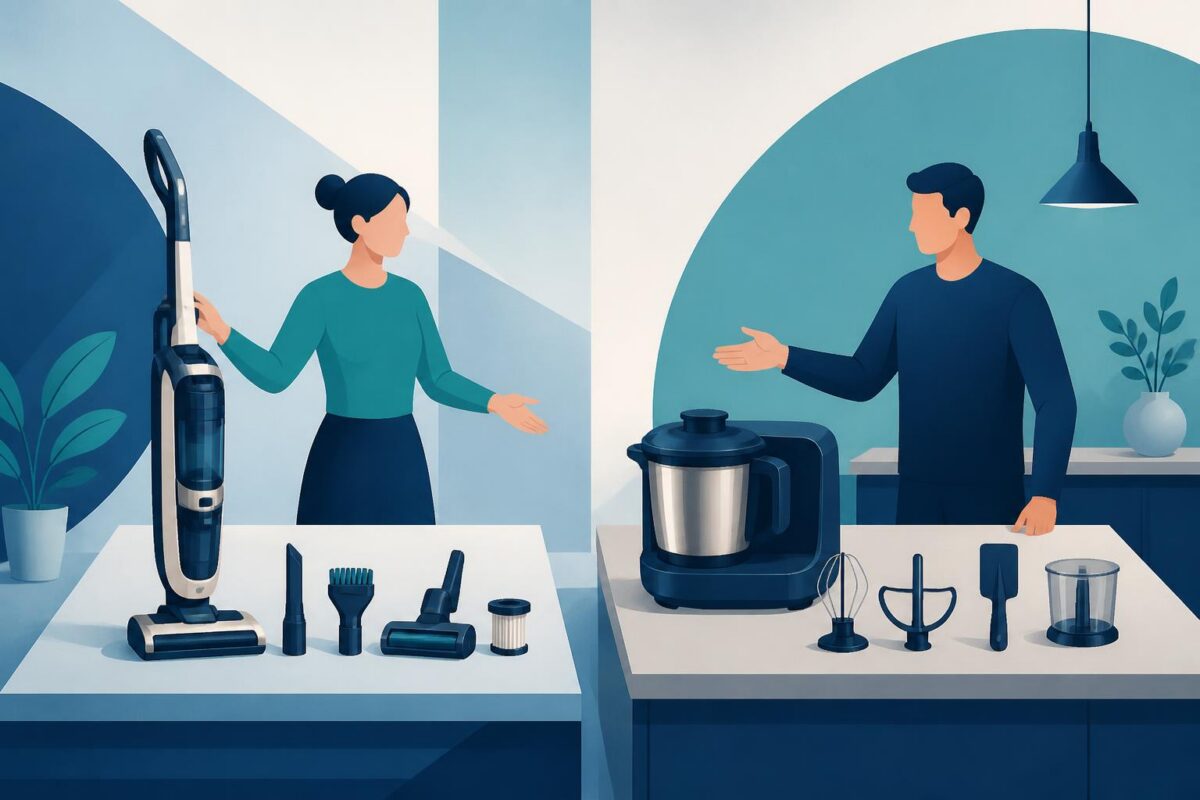
SharkNinja visual support could help with a deceptively simple question: which product and accessory is the customer actually holding? A household may contain several appliances, each with parts that the owner describes using similar words. Advice becomes unreliable when the agent and customer picture different objects.
Accessory identification across a broad household portfolio is a strong prospective fit for Viewabo. This article is an independent analysis, not a claim that SharkNinja uses or endorses Viewabo.
A broad portfolio creates an identification problem
SharkNinja’s third-quarter 2023 company release describes categories spanning cleaning, cooking, beverage preparation, and food preparation. Those categories provide the context for this support opportunity. They do not establish that the company has a particular support problem or failure rate.
Consider a hypothetical customer who says a removable part will not fit. The useful next question is not immediately how hard to push or which part to replace. First establish the product family, model, and object being discussed.
A customer may call several unrelated objects a container, head, filter, or attachment. The agent should not treat that vocabulary as a reliable part number. Product identity and accessory identity need separate confirmation before advice becomes specific.
SharkNinja visual support can resolve the reference
A focused shared view could help establish which appliance and loose part are present. Ask the customer to show the relevant objects in a safe, stationary condition. Use official identifying information to confirm the interpretation rather than trusting appearance alone.
For example, an agent might need to distinguish a missing component from a component that belongs elsewhere. Those cases imply different next actions. A replacement request cannot resolve an instruction problem, and another explanation cannot supply a genuinely absent item.
Keep the comparison narrow. A whole kitchen or storage cupboard adds little if the question concerns one attachment. The customer should understand which detail matters and why showing it may change the support decision.
Separate resemblance from approved compatibility
Two accessories can look related without being interchangeable. Visual communication should help the agent choose the right documentation, not create a new compatibility rule. Confirm any proposed combination against official model-specific guidance before the customer uses it.
The same boundary applies to ordinary care. Instructions for one product family should not migrate to another because both objects share a familiar name. Establish the exact reference before discussing cleaning, removal, or reassembly permitted for that product.
Viewabo could help both people understand the physical question. It does not determine accessory compatibility, authorize repairs, or replace the manufacturer’s instructions. The value lies in connecting those instructions with the object in front of the customer.
Route three different outcomes deliberately
The first outcome is clarification: the customer has the expected parts and needs help interpreting the documented setup. Explain the relevant step in that context and confirm that the customer can identify the same parts afterward.
The second outcome is a supply question: an item appears missing or different from the order. Record the product identity, expected item, and observed item. Route that evidence to the appropriate order or parts process without promising eligibility.
The third outcome is a condition concern. If damage, an uncertain fit, or another issue needs expert assessment, stop ordinary setup guidance and arrange the right service route. Do not ask the customer to force a connection to complete the call.
Preserve the distinction in the handoff
A useful note should name the appliance, accessory, source used to establish identity, and unresolved question. A vague note saying the attachment does not work can send the next person back to the beginning of the conversation.
For cleaning complaints, the vacuum cleaner support guide shows how the identified accessory fits into the path from surface to pickup.
Also record what remains unconfirmed. A readable label, a customer’s recollection, and a visual resemblance are different kinds of evidence. The receiving team should know which one supports each conclusion before ordering anything or supplying further instructions.
If the customer returns with another product, restart identity checks. Familiarity with the person should not become an assumption that the next object belongs to the same family. This is particularly important when households buy across several categories.
Evaluate SharkNinja visual support through correct routing
A pilot could examine contacts where accessory descriptions are ambiguous. Review whether agents establish identity before advice, reduce unnecessary transfers, and produce better parts or service requests. Include unresolved cases rather than counting every completed contact as a success.
The wider case for video in customer support starts with a shared reference. SharkNinja could evaluate Viewabo where seeing the actual appliance and attachment helps turn an uncertain description into an appropriate next action.