
Wahoo Visual Support: Separate Trainer Fit From a Hardware Fault

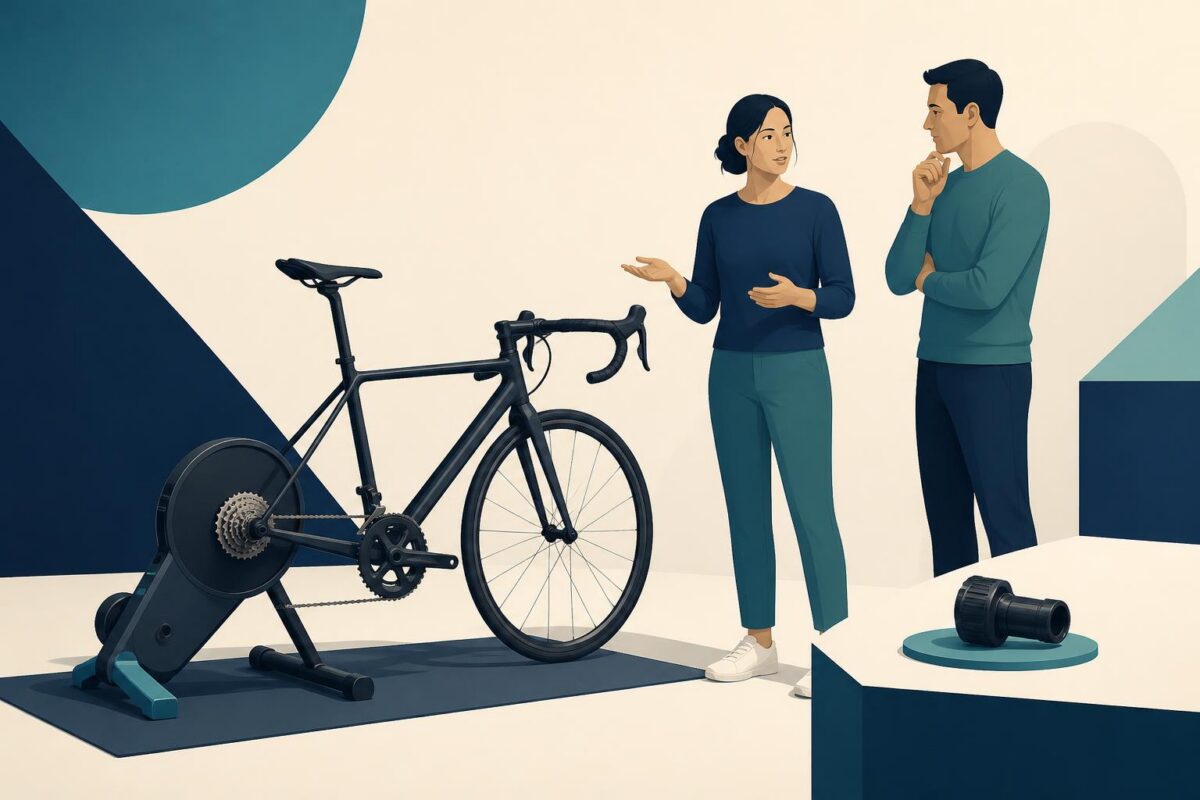
Wahoo visual support could help when an indoor-training question begins at the boundary between a bicycle and a trainer. The customer may describe the trainer as not working when the unresolved issue is the physical combination. Support needs to understand that combination before treating the report as a hardware fault.
This is an independent analysis of a prospective Viewabo fit. It does not claim that Wahoo uses or endorses Viewabo, or that any particular bicycle and trainer combination is compatible.
The bicycle is part of the support context
Wahoo’s August 2022 company announcement describes its KICKR indoor-riding equipment and related cycling portfolio. The relevant point is the physical system around the product. An indoor trainer does not exist in isolation from the bicycle and accessories involved.
Our independent Garmin sensor analysis offers a related example of connecting a device’s digital identity to the actual cycling equipment.
Begin with the trainer model, bicycle identity, and the customer’s intended setup. Ask whether the question arose before mounting, after a change of bicycle, or during an established routine. Those are different starting points for the support process.
Do not infer compatibility from the fact that the customer has used a similar setup before. Confirm the exact combination against the relevant official guidance. The first useful outcome may be identifying information that is still missing.
Wahoo visual support could clarify the interface question
A shared view of safely stationary equipment can help establish the objects under discussion. The customer may not know the terminology for an adapter or interface. A common view can connect their description with the correct product reference.
For example, an owner might be unsure whether a loose item belongs to the trainer, bicycle, or another accessory. Identify it before explaining a setup step. A mistaken reference can send an otherwise clear instruction in the wrong direction.
Visual resemblance is not proof of an approved fit. Use documentation and qualified judgment for compatibility and mechanical condition. A support conversation should never convert an uncertain view into permission to force parts together or modify them.
Keep the equipment stationary during intake
Do not ask the customer to pedal while handling a phone or trying to expose a moving interface. The initial conversation can establish identity and setup context without loading the equipment. An uncertain physical condition belongs with the appropriate assessment.
If an approved user step is relevant, explain its purpose and the applicable guidance. Avoid improvised torque advice, spacer combinations, or frame adjustments. The equipment and bicycle instructions remain the authority for how work should be performed.
Viewabo could help support and customer agree on what they are discussing. It does not certify frame clearance, mechanical security, or compatibility. Its value is reducing ambiguity before the team selects the next responsible action.
Separate three routes before shipping hardware
One route is documentation: the identified combination is covered by guidance that the customer needs help understanding. The support task is to make that guidance clear without adding undocumented steps or assumptions.
Another route is compatibility review: the combination or required item remains uncertain. Gather the exact identities and refer the question to the right source. A replacement trainer would not necessarily resolve an unanswered compatibility question.
The third route is service: an observed or reported condition requires assessment of the equipment. Prepare a precise account without asserting a component failure. The next specialist should know why service is being requested and what remains unverified.
Carry the whole setup into the handoff
A useful record names the trainer, bicycle, relevant accessory, and stage at which the concern arose. Distinguish the customer’s description of earlier use from the configuration currently visible. This helps avoid diagnosing an event against the wrong setup.
Include the specific official guidance consulted and the unresolved question. A note saying the bike does not fit is too broad if the next person must reconstruct all the identifying information. Clear intake should make the specialist’s first question more useful.
When a bike shop or another qualified party is needed, explain that role to the customer. The purpose is to reach the appropriate assessment, not to move responsibility away without context. The customer should understand how the handoff advances the case.
Evaluate Wahoo visual support through correct separation
A pilot could focus on trainer contacts involving a new bicycle or unclear attachment identity. Review whether agents separate guidance, compatibility, and service needs. Track repeated explanations and unnecessary hardware routing as well as cases appropriately stopped for review.
The wider case for video in customer support is the value of shared physical context. Wahoo could evaluate Viewabo where seeing the bicycle-trainer relationship helps determine which question must be answered before the rider continues.