
Zebra Visual Support: Keep Device Evidence With the Workflow

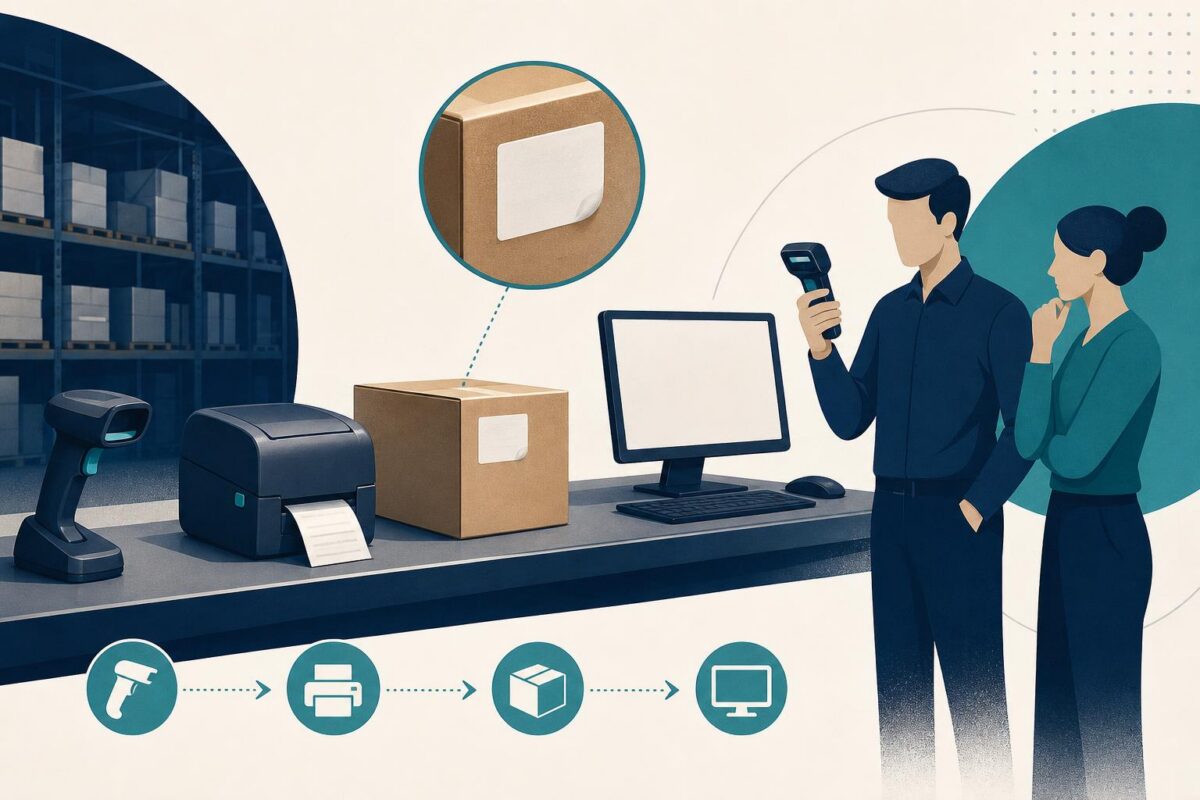
Zebra visual support is a strong prospective fit when a frontline device problem interrupts a larger workflow. A worker may report that a scanner does not work even though the real concern is what happens after a scan. Another may blame a label printer when the next station cannot use the output. Support needs the workflow as well as the device.
Viewabo could help an onsite worker and a remote specialist discuss that physical context together. This is an independent fit analysis, not a claim that Zebra Technologies uses or endorses Viewabo.
The business task should travel with the device report
Zebra’s 2020 annual report, published in 2021, describes its work across retail, transportation, logistics, manufacturing, and other frontline environments. Its portfolio includes scanning and printing products. Those facts support a practical distinction: a device is often one step within a larger operational task.
Our recommendation is to record the failed task before assigning a hardware label. Was the worker receiving an item, preparing a shipment, or completing another approved activity? What result did the next step require? The answer helps the support team understand the interruption without assuming its cause.
For example, an audible response from a scanner does not by itself establish that the intended data reached the right place. Conversely, an unexpected application result does not prove that the scanner failed to read. Those are separate observations that belong in the same case.
The barcode scanner support workflow separates reading a code from successfully entering its data into the intended system.
A label, a scanner, and an application can tell different stories
In a hypothetical warehouse case, a worker has a printed label that a downstream station cannot use. The receiving specialist should know which equipment produced it, where the difficulty appeared, and whether the issue affects one item or a broader group.
A shared view of a non-sensitive sample can help clarify the customer’s description. It may show placement, damage, or another visible characteristic worth investigating. It cannot prove barcode quality or data correctness without the appropriate validation process.
This is where visual context earns a narrow role. It can direct the next question and identify the relevant object. It should not replace the technical checks needed to establish why a read or transaction failed.
Where Zebra visual support could improve a shift handoff
Frontline equipment may move between people during a shift or between work areas. A useful support record should preserve the device identity and the task context when the person reporting the problem changes. Otherwise, the next worker may inherit a request to repeat an experiment without knowing why.
An agent could ask an authorized worker to show the accessible device arrangement and identify the relevant connection or accessory. The observation should remain separate from assumptions about configuration. A visible connection is evidence of an arrangement, not proof that the system is correctly configured.
Viewabo could help maintain a common physical reference during that exchange. The proposed benefit is clearer human communication. It does not imply device-management capabilities or access to Zebra or customer enterprise systems.
Give hardware and application teams different questions
The hardware specialist needs equipment identity and the observed behavior. The application team may need the business action and the resulting data state. The support process should give each team a question it can investigate without asking the worker to choose the technical owner alone.
Record what is known, what remains uncertain, and which checks already occurred. When an issue crosses that boundary, carry the observations forward. Do not convert a suspicion into a confirmed hardware fault merely to select a routing category.
This also helps the customer distinguish a repair need from a workflow question. A useful escalation is one that reaches the right owner with sufficient context, even when the initial team cannot complete the resolution.
Keep production and sensitive data out of unnecessary tests
Any demonstration should respect the site’s operating process. Use an approved sample where possible rather than asking a worker to create extra transactions, relabel live stock, or interrupt a busy station without authorization. The question being tested should be clear before the action occurs.
Printed labels and screens may expose customer, shipment, or other confidential information. The agent needs only the context relevant to the support decision. A non-sensitive example can often explain the observed problem without displaying real operational data.
Physical access matters too. An employee should not reach into moving equipment or bypass a guard to show a scanner or printer. If the necessary observation requires authorized service access, document that boundary and route accordingly.
Evaluate context continuity
A Zebra visual support pilot could focus on one handoff between frontline staff and technical support. Review whether the receiving team gets the correct device identity, business task, and observed result. Track repeated explanations and unresolved transfers alongside resolution outcomes.
The case for Viewabo is strongest where physical evidence is currently lost between those steps. The broader case for video in customer support applies here: keep the device, the label, and the intended workflow in one coherent conversation before deciding what needs attention.