
Dishwasher Support: Diagnose the Rack Before Repeating a Cycle

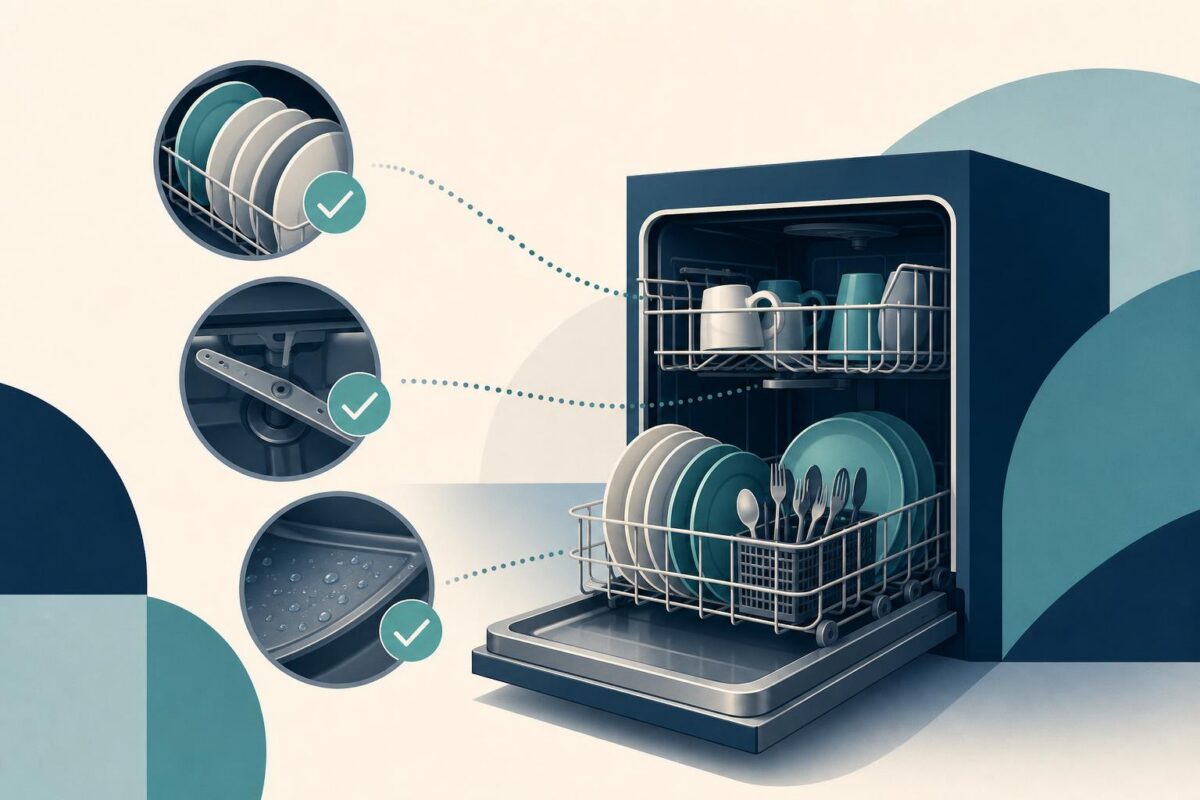
Dishwasher support should look at the rack before asking the customer to repeat the same unsuccessful cycle. A dirty bowl, a blocked dispenser, and a machine that never starts are different problems. When every complaint becomes dishwasher not cleaning, the agent loses the details needed to choose a useful next step.
Viewabo can help the customer and agent discuss the actual loading arrangement and visible result. The aim is to understand the process around the dishes, not inspect plumbing or internal machinery remotely. A clearer view can support a better decision without turning an owner into an appliance technician.
Dishwasher support begins with the specific result
Ask what remains wrong after the cycle. Is food still present, are items wet, is there a visible residue, or did the program stop? Clarify which items are affected and where they sat. A problem confined to one area is a different observation from a uniform result across the whole load.
Use a small example rather than asking for a tour of every dish. Keep the appliance stopped and cool before any permitted access. The customer should not interrupt a hot operating cycle merely to give the agent a better picture.
Record the selected program and any exact message. Do not translate every unfamiliar symbol into a mechanical fault before checking the correct manual.
Match the rack arrangement to the instructions
Identify the model and compare its loading guidance with the visible rack. Whirlpool’s Whirlpool Dishwasher Use and Care Guide, W10102271B separates loading, cycle selection, and maintenance as distinct parts of ordinary use. Support should preserve those distinctions instead of treating one generic cleaning tip as a complete diagnosis.
Ask where the relevant item sat and whether anything obviously interfered with a documented moving or dispensing area. Do not ask the customer to force components or reach near sharp objects. If the arrangement is uncertain, use a simple unloaded comparison against the manual.
Explain the observation neutrally. This item sits across the area shown in the guide is more useful than telling the customer they do not know how to load a dishwasher.
Our independent Miele support analysis examines how dishwasher guidance can stay connected to the actual load.
Separate cleaning, drying, and residue questions
Food remaining on a surface, water left on an item, and a cloudy appearance may require different questions. Ask the customer to describe the result rather than accepting a broad label such as dirty. Avoid making chemical or material diagnoses from a camera view alone.
Confirm that the items and cleaning products are appropriate for the machine according to their instructions. Do not suggest mixing cleaners, adding improvised chemicals, or escalating detergent quantities as a universal remedy. Use the manufacturer’s recommendations for the identified product.
Dishwasher support should change one permitted variable at a time. If loading, program, and cleaning product all change together, the next result will not explain which difference mattered.
Commercial dishwasher support requires a separate operating context, even when the initial evidence is the result coming off a rack.
Keep maintenance within owner-level boundaries
A documented user-maintenance task may be suitable when the appliance is in the required safe state. Follow the exact instructions. Do not assume every dishwasher has the same removable parts or cleaning procedure.
If access requires pulling out the machine, touching wiring, disconnecting plumbing, or removing service panels, arrange qualified help. Leakage, unusual heat, burning smells, or electrical concerns should stop ordinary testing. A visual session cannot make hidden connections safe to inspect.
Likewise, do not tell the customer to override a door mechanism or run the appliance with a part removed. A desired view of the washing action is not a valid reason to defeat the designed enclosure.
Plan a comparison that answers one question
Choose a small representative load and the documented program when normal operation is safe. State what the test is intended to show. If the hypothesis concerns loading, keep other relevant conditions stable instead of changing the entire routine.
A complete cycle may extend beyond the call. Agree on a follow-up result and a clear owner. The customer should know what to report and which warning signs require them to stop rather than continue experimenting.
Do not claim success because the machine starts. If the original complaint concerns dishes at the end, the result must be checked at the end. Starting a cycle is only progress toward verification.
Close with a useful result or service record
Compare the specific item and rack area that prompted the contact. Confirm whether the unwanted result changed and whether the customer understands the relevant loading or program instruction. Avoid presenting a single improvement as proof that every future load will perform identically.
For unresolved cases, record model, selected cycle, affected items, rack locations, and completed owner-level checks. Distinguish visible observations from unverified explanations so the next specialist can assess the appliance properly.
Viewabo supports the shared view between the customer, dishes, and support guidance. See why video belongs in customer support for the broader communication principle. Dishwasher support becomes more useful when it identifies the actual result, tests a defined explanation, and verifies the outcome instead of simply recommending another wash.