
Air Purifier Support: Check Placement and Expectations

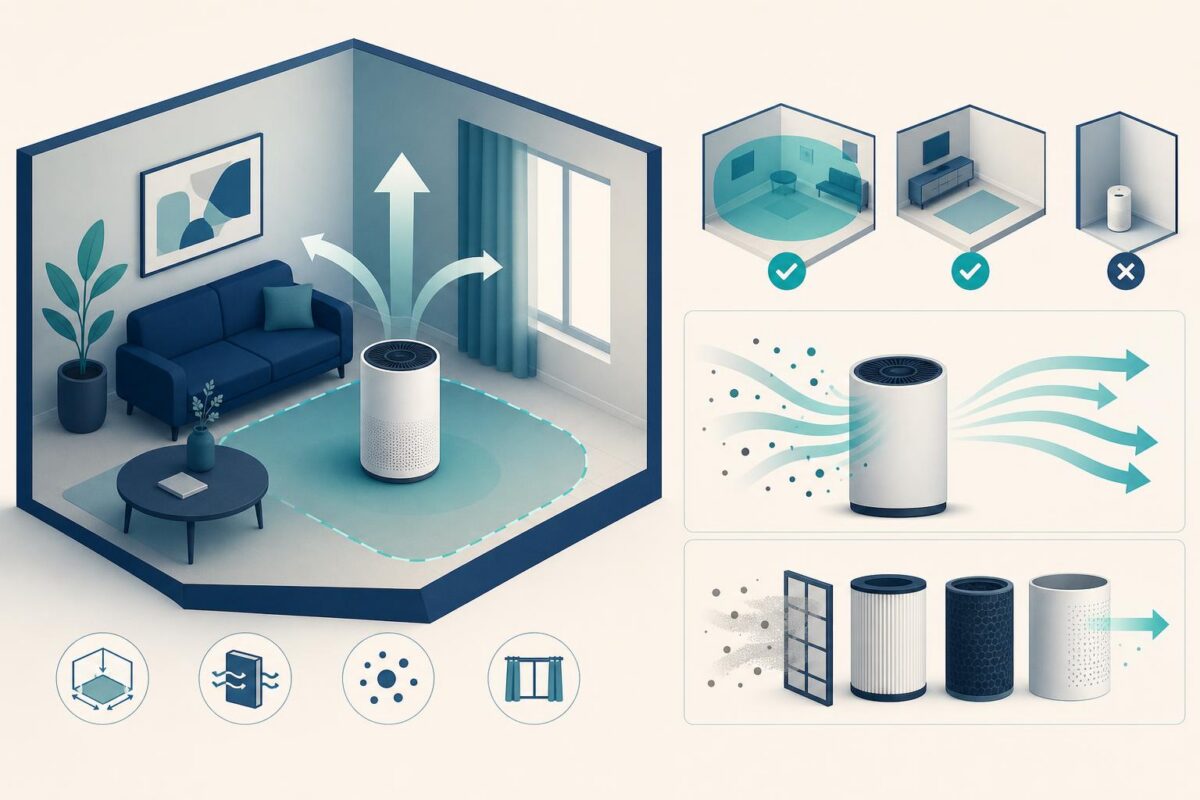
Air purifier support should clarify what the customer expects the device to change. A quiet fan, an unfamiliar indicator, visible dust, and concern about indoor air quality are different issues. If the agent treats all of them as a failed purifier, the conversation can quickly drift into promises that neither the product nor a visual check can support.
Viewabo can help the customer and agent discuss placement, accessible controls, and the visible filter setup. The benefit is a better understanding of the physical environment. It does not measure pollutants, diagnose symptoms, or establish that a room is healthy from its appearance.
Air purifier support starts with the expected outcome
Ask what prompted the contact and how the customer judges success. Are they concerned about airflow, noise, an indicator, or a specific room condition? Record the observation separately from the explanation the customer suspects.
The EPA’s EPA Guide to Air Cleaners in the Home, second edition describes portable air cleaners as a supplement to source control and ventilation, with limits on what they remove. That matters for support because an operating purifier is not a universal solution to every indoor-air concern.
If the customer raises a health symptom or hazardous exposure, direct them to the appropriate professional guidance. Do not interpret the symptom as evidence of a defective filter or suggest a product setting as medical advice.
Identify the unit and its intended space
Confirm the model and consult its documentation for intended use. Ask which room the customer is trying to serve and where the unit sits. A purifier placed in one space should not automatically be expected to produce the same result throughout an entire building.
Portable AC support also depends on the room setup, with window and exhaust questions separated from a unit failure.
A brief view can show whether furniture or stored items obstruct the normal airflow area. Compare the arrangement with the manufacturer’s guidance. Do not infer actual air-cleaning performance from the visible distance to a wall alone.
Keep the discussion focused on the relevant space. There is no need for a tour of the whole home or an inventory of private belongings to answer a placement question.
Separate controls from airflow observations
Ask the customer to show or read the selected mode and any message. Use the identified model’s documentation to explain the difference between a quiet mode, a fan setting, and a maintenance indicator where applicable.
Do not assume a low sound level proves that the fan has stopped. Likewise, an audible fan does not establish that filtration is effective. These are limited observations that need the proper product context.
Air purifier support should choose one safe, documented comparison. If a mode change is appropriate, record the original setting and explain what the customer should observe. Avoid changing several controls and moving the unit in the same attempt.
Check owner-accessible filter preparation
Where the manufacturer permits user access, follow its required safe state and instructions. A view of the correct filter identifier or packaging can help confirm that the right component is present. Do not assume compatibility from a similar size.
If the product is new, consult the documented unpacking and preparation steps. If it is already in use, consult the documented maintenance process. Do not recommend washing, vacuuming, or treating a filter unless that specific product guidance permits it.
A reset maintenance indicator is not evidence that the filter was serviced correctly. Keep the physical task and the control acknowledgment separate. If the assembly does not match the manual or a component is damaged, stop and arrange appropriate support.
Avoid claims the evidence cannot establish
A camera cannot show the full pollutant burden in a room. The agent should not promise complete removal of smoke, odors, allergens, or other substances based on the purifier’s appearance or one indicator. Use only the manufacturer’s verified claims and appropriate authoritative guidance.
Similarly, do not diagnose a moisture or mold problem through a brief view and prescribe the purifier as the solution. Those issues may require attention to their source and a qualified assessment.
For abnormal heat, electrical damage, a burning smell, or another hazardous condition, stop ordinary troubleshooting. The customer should not open the housing, test suspect power equipment, or continue operation to produce more evidence.
Verify the operational question and explain the limit
Return to the specific complaint that can be checked. Confirm that the customer understands the selected mode, that any permitted setup task is complete, and that the observed operation matches the product guidance. State what has not been established about room air quality.
For a service case, record the model, room context, visible state, exact message, and completed checks. If the issue concerns expectations rather than a fault, explain the intended role clearly without dismissing the customer’s concern.
Viewabo helps make placement and physical setup easier to discuss. The larger value of shared visual context appears in why video belongs in customer support. Air purifier support is strongest when it verifies a narrow operational result and avoids turning a clearer picture into an unsupported health or performance guarantee.