
Portable AC Support: See the Window Setup Before Replacing It

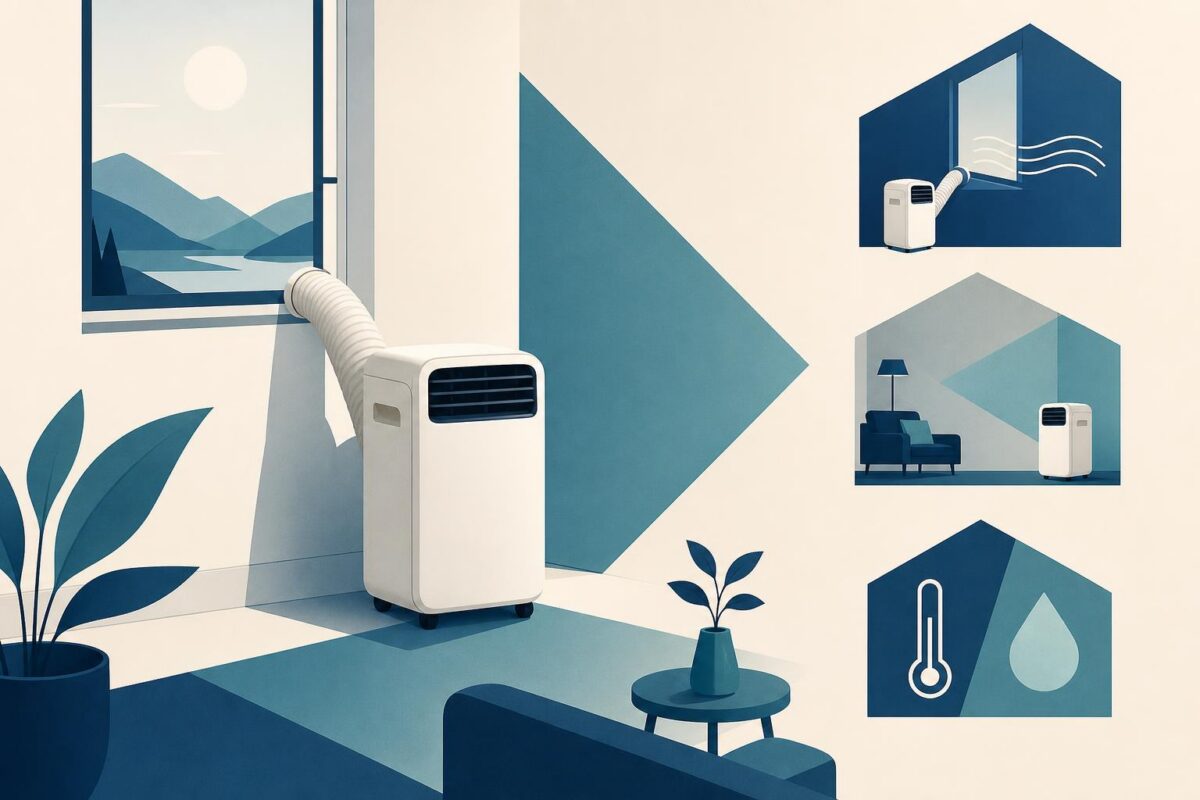
Portable AC support should include the window arrangement and the room, not only the temperature shown on the unit. A customer can select cooling correctly while the installation or environment prevents the expected result. Without that context, repeated control changes may create activity without producing a useful diagnosis.
Viewabo can help an agent understand the visible unit, accessible exhaust arrangement, and room conditions. The goal is to compare the actual setup with the manufacturer’s guidance. It is not a remote certification of electrical safety, cooling capacity, or the integrity of a window installation.
Portable AC support starts with the comfort complaint
Ask which room the customer wants to cool and what they observe. Distinguish no operation, airflow without the expected cooling, an unfamiliar message, and water where it should not be. Each deserves a different next question.
Record when the issue began and whether the unit worked in the same arrangement before. A new room, moved unit, or changed window setup can provide a useful comparison without proving the cause.
The EIA’s EIA air conditioning in U.S. homes by housing unit type, 2015 distinguishes individual air-conditioning equipment from central systems. For support, that is a reminder to focus on the specific room and installation the customer is using rather than assume a whole-home cooling outcome.
Identify the actual unit and its required arrangement
Confirm the model and locate its installation and operating instructions. Portable units can have different hose, drainage, and window requirements. Do not substitute a familiar setup from another model.
Ask for a wide view from a safe indoor position. Identify the unit, the visible hose path, and the window attachment without asking the customer to lean outside. A close view alone may conceal a bend or obstruction elsewhere in the arrangement.
Compare visible conditions with the maker’s instructions. State uncertainty where a connection or route cannot be seen. An installation that looks plausible from one angle is not automatically correct.
Separate room conditions from a product fault
Ask about the room’s ordinary conditions during the complaint: open doors, direct sun, heat-producing activity, and the area the customer expects to cool. Keep this focused on the specific task rather than conducting an unsolicited home audit.
These observations can explain which questions to investigate, but they do not establish a precise cooling load. The agent should not promise a particular temperature change from a visual impression. Use the product’s documented operating limits and appropriate professional advice.
Portable AC support should also distinguish a customer’s selected target from an actual room measurement. A number on the control panel may not represent the same thing as a separate thermometer reading.
The air purifier support guide offers a parallel way to separate room placement and customer expectations from an equipment fault.
Make one documented adjustment at a time
Where normal user operation is safe, select one approved check that tests a clear explanation. It may concern a control selection or an accessible installation detail. Record the original arrangement before changing it.
Do not improvise hose extensions, sealants, electrical adapters, or drainage modifications. A support call should not turn a cooling complaint into an unsupported installation experiment. If the setup requires work beyond the customer’s safe user tasks, arrange suitable assistance.
The customer should not lift a heavy unit alone, handle wet electrical equipment, or access concealed parts. Abnormal heat, damaged cords, smoke, or other hazardous conditions should stop ordinary troubleshooting.
Plan for time and condensate questions
A cooling outcome may need an observation period beyond the call. Agree on what the customer will measure or notice and when to report back, using the manufacturer’s guidance. Repeatedly changing the target during that period makes the result harder to interpret.
If the complaint concerns water, identify where it appears without asking the customer to open the machine or disconnect uncertain lines. Different products manage condensate differently. Use the correct instructions and stop at the professional-service boundary.
Keep immediate comfort needs separate from equipment status. A temporary alternative may be necessary while the issue remains open. Do not call the appliance fixed simply because the customer moves to another room.
Ask whether the window arrangement or room use changed between the first complaint and the follow-up. An open doorway, moved exhaust assembly, or different occupancy may make two observations incomparable. Note that change before judging whether the approved correction worked.
Verify the room-level result
At follow-up, return to the original room, normal conditions, and agreed observation. Confirm whether the actual complaint improved and whether any message or water concern remains. A running fan alone is not proof that cooling performance meets the intended task.
For a service handoff, record model, installation context, selected mode, timing, and completed checks. Distinguish customer-reported temperatures from observations the agent directly confirmed. The next person should receive a defined question, not merely portable unit does not cool.
Viewabo helps support teams see the physical arrangement that control-panel data leaves out. The broader communication principle appears in why video belongs in customer support. Portable AC support becomes more useful when it connects the unit, room, and installation to one testable complaint, while respecting the limits of remote observation.