
Self-Service Is Table Stakes — Here’s What Actually Differentiates Support in 2026

Support in 2026 is reshaping how we think about this topic. When 80% of top-tier companies now have self-service support deployed, you have to stop calling it a differentiator. Certainly, self-service is customer support differentiation 2026 table stakes. A knowledge base, an FAQ page, a basic chatbot , these aren’t competitive advantages anymore. They’re the minimum required to not look like you’re behind.
Furthermore, so the question becomes: Likewise, when self-service inevitably fails , and it will fail , what happens next? That’s where the real differentiation lives.
Self-Service Is Not Enough on Its Own: The Support In 2026 Angle
However, self-service handles the routine cases. Instead, password resets, order status, standard how-to questions. For these interactions, a well-built knowledge base and a decent chatbot are genuinely effective. They’re fast, they’re available 24/7, and they don’t require a human to handle something that doesn’t require a human.
Moreover, but self-service has hard limits. Still, it breaks on complex problems, on ambiguous descriptions, on cases. Require judgment, and on customers who are already frustrated. These are often your most important customers , the ones mid-onboarding. The ones with time-sensitive problems, the ones who’ve already tried self-service and failed.
In addition, here’s the data point that matters: Yet, studies consistently show that customers who have a bad escalation experience. After self-service failure churn at dramatically higher rates than those who had a bad self-service experience alone. The failure of the fallback is worse than the failure of the primary channel.
Additionally, in other words, how you handle the moment. Self-service isn’t enough is more important than how good your self-service is.
The Stack That Actually Differentiates
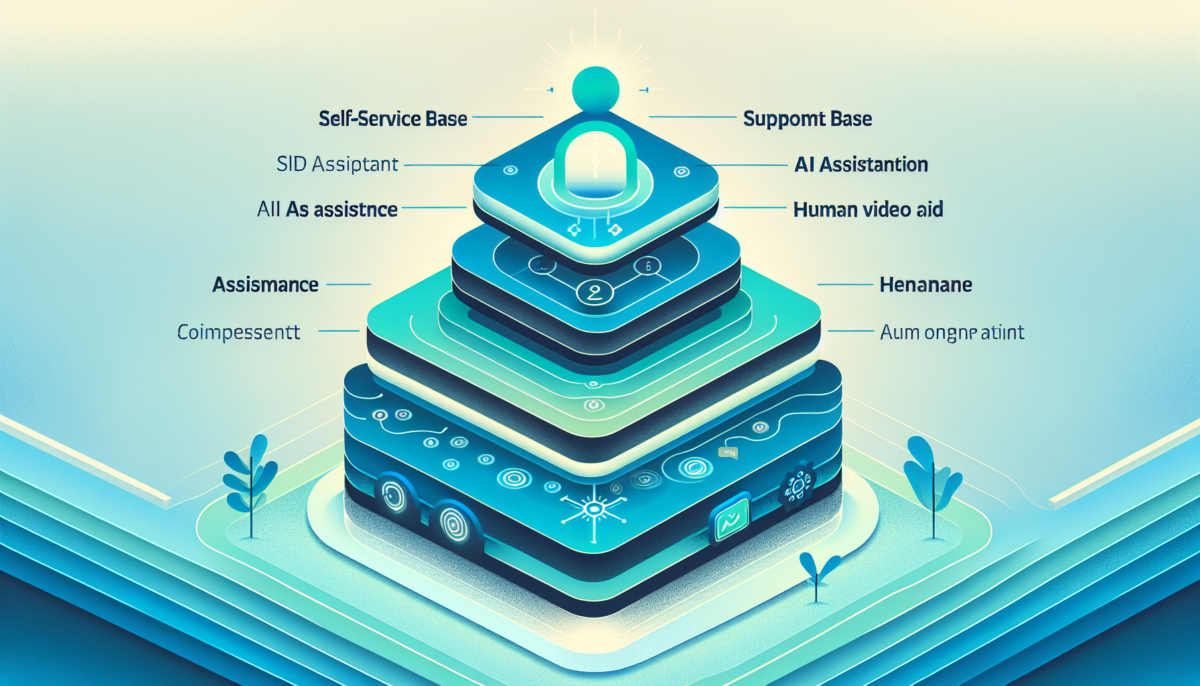
Also, the companies winning in customer support in 2026 are building multi-layered stacks. Each layer handles what it does best:
Specifically, layer 1: AI triage. Every incoming contact gets classified, prioritized, and routed immediately. AI determines: Is this a known issue with a known solution? Route to self-service. Is this a case that needs human involvement? What kind? AI triage should be nearly invisible , it just makes everything downstream faster.
Consequently, layer 2: Knowledge base with AI assist. When a customer needs information, they should be able to get it without waiting for a human. But the knowledge base should be AI-augmented , not just search, but synthesis. The AI should be able to pull together relevant information from multiple articles. Present a cohesive answer, not just return a list of links.
Therefore, layer 3: Human escalation with context. When the problem requires a human, the handoff should be seamless. The human agent should have full context: what the customer tried, what the AI attempted, what the likely issue is. No customer should have to repeat themselves at this layer.
Meanwhile, layer 4: Visual escalation for complex physical issues. For problems that require seeing , hardware issues, installation problems. Damage assessment , the final escalation layer should include visual support. A support agent who can see the problem resolves it faster. With higher customer satisfaction than one who’s guessing from a description.
Where Most Companies Drop the Ball
For example, the most common failure mode I see is a gap between layers 2 and 3. Self-service fails, the customer asks for a human,. The experience degrades dramatically: long wait times, context loss, agents who have to start the diagnosis from scratch.
Furthermore, in other words, that gap is where trust gets destroyed. Customers who experience it feel like they were routed to self-service to avoid being helped. The cynical read , which many customers hold , is that self-service is a deflection strategy, not a help strategy.
Similarly, fix the handoff. Make sure that when a customer escalates. The human they reach has everything they need to resolve the issue without restarting. That single improvement often has more impact on customer satisfaction scores than any investment in the self-service layer itself.
The Real Differentiator Is the Escalation Experience
Indeed, here’s the reframe that I think is most useful for support leaders in 2026: don’t optimize for deflection. Optimize for escalation quality.
In fact, every support ticket that escalates is a customer who needs more help than self-service can provide. That customer is also, statistically, your highest-risk customer , they’re more likely to churn. More likely to leave a review, more likely to tell other people about their experience.
Of course, handle that escalation well, and you turn a potential churn event into a loyalty moment. The human layer is still the differentiator , and in a world. Self-service is table stakes, making that human layer exceptional is the actual competitive advantage.
Moreover, naturally, self-service is not your moat. Your moat is what happens when self-service isn’t enough.
For additional context, see OpenAI’s research on AI capabilities.