
Why 79% of Customers Still Prefer Humans Over AI — And What That Means for Support Teams

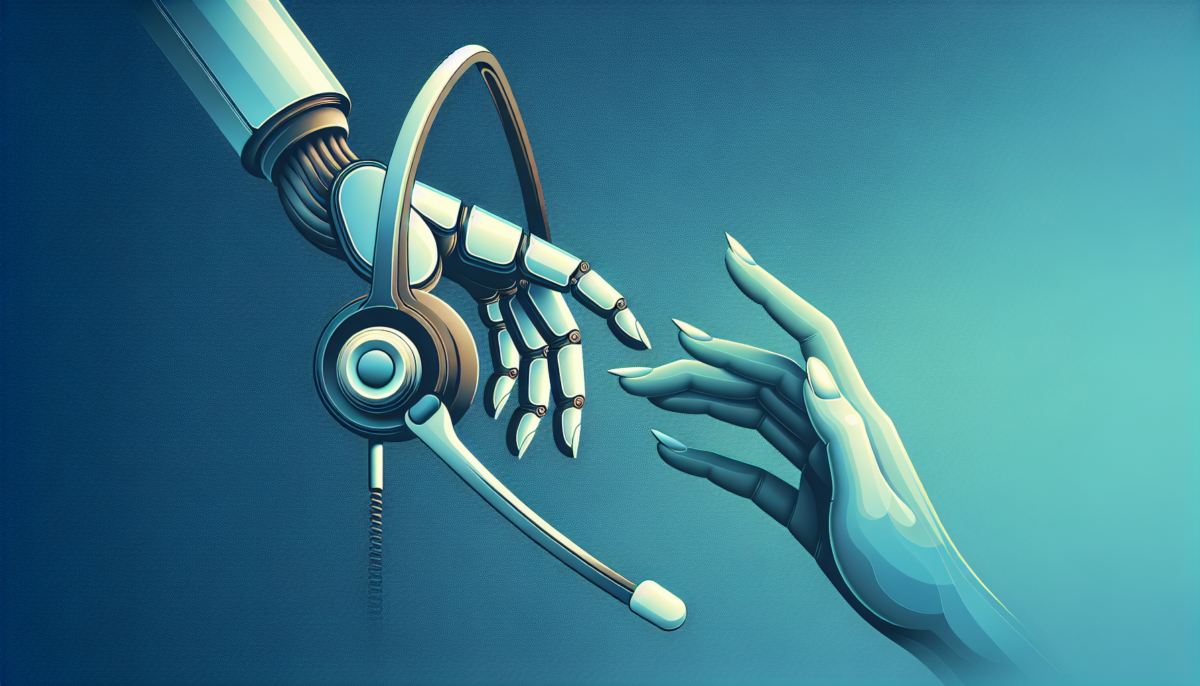
Here is the stat that should make every support team leader pause: 79% of Americans still prefer human customer service over AI, according to SurveyMonkey’s 2026 research. In human vs AI customer service, consumers are voting with their frustration — and they’re voting for humans. Even more striking, a separate SurveyMonkey study found that 90% of people prefer human agents overall. The NPS gap between human agents and AI chatbots? 72 points.
That’s not a small preference. That’s a chasm.
So why is every company rushing to replace their support staff with AI chatbots? Because it looks cheaper on a spreadsheet. Because investors want to see headcount reductions. Because someone in a conference room saw a demo and thought, “we can do that.” The problem is: customers don’t care about your spreadsheet.
The AI Chatbot Backlash Is Real
Let me be direct about what’s happening. Companies deployed AI chatbots, customers got frustrated, and now we have data to prove it. Only one in four consumers say they like or love AI in customer service, according to a joint HubSpot and SurveyMonkey study of 15,000 consumers across seven markets. That means three out of four are either neutral, frustrated, or actively angry.
The reasons customers give are consistent:
- Humans better understand their needs (61%)
- Humans provide more thorough explanations (53%)
- AI is more likely to frustrate them (52%)
Notice what customers aren’t saying. They’re not saying AI is slow. They’re not saying it’s too expensive. They’re saying it doesn’t understand them. That’s a fundamental limitation — not a bug you can patch in the next model update.
The real problem is that most AI customer service deployments are solving the wrong problem. Companies optimize for cost-per-ticket while customers optimize for resolution quality. Those goals are not aligned. When you optimize purely for deflection, you deflect customers straight to a competitor.
The Winning Formula Isn’t AI vs. Humans — It’s Both
Here’s the framework that actually works: AI behind the scenes, humans on the front line.
AI excels at specific things in support. It can triage incoming tickets instantly. It can surface the right knowledge base articles for an agent. It can detect sentiment and flag escalations before they become crises. It can summarize long conversation histories in seconds. All of this makes human agents faster and smarter — without removing the human from the equation.
What AI fails at is the messy, emotional, context-dependent work that most support interactions involve. A customer whose product stopped working two days before a big event doesn’t want an efficient deflection. They want someone who gets it. They want to feel heard. An AI can simulate empathy, but customers can tell the difference — and when they’re already frustrated, the simulation makes things worse.
This is why the most sophisticated support organizations in 2026 aren’t choosing between AI and humans. Instead, they’re designing systems where AI handles the volume and humans handle the stakes.
The Video Advantage: Keeping the Human Connection Alive
There’s one channel that does something remarkable in support: it makes the human feel real. Video.
When a customer can see a support agent — or even just share their screen and show what’s broken — something shifts. The interaction moves from transactional to collaborative. The frustration drops. The resolution rate climbs.
At Viewabo, we built our product around this insight. Text-based troubleshooting for physical products is broken. When something is physically wrong with a device, a router, an appliance, or a piece of equipment, trying to describe it in words is maddening. But the moment you can show it — actually show a support agent what’s happening in real time — the path to resolution becomes obvious.
Video keeps the human element alive in support. It also happens to be the most efficient path to resolution for complex physical product issues. That’s not a coincidence. Efficiency and humanity don’t have to be opposites.
What Support Teams Should Actually Do
Stop thinking about AI as headcount replacement. Start thinking about it as an amplifier for your best agents.
Your agents are already doing this work. They’re reading tickets, pulling up knowledge base articles, typing responses. Every one of those steps can be assisted by AI — speeding up resolution without removing the human who ultimately owns the outcome.
Meanwhile, invest in the escalation layer. When self-service fails, when the chatbot hits its limit, when a customer is truly stuck — what happens next defines your brand. The real work behind AI is still human, and nowhere is that truer than at the moment a customer needs help most.
The data is clear. Customers want humans. The question is whether you’re building a support model that respects that — or one that bets against it.
I’ll take the 79%.