
Irrigation Support: Connect the Controller to the Landscape

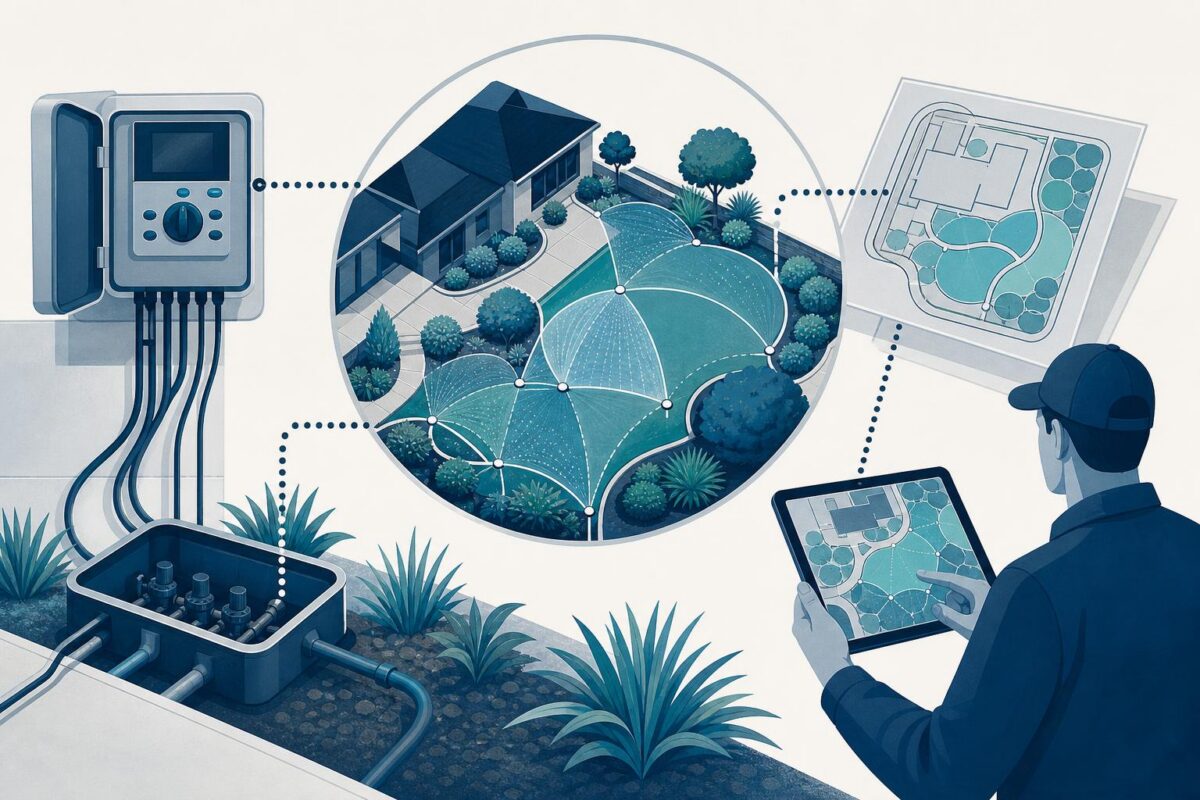
Irrigation support often breaks down between the controller's zone name and the patch of landscape the customer is describing. "Zone four is dry" is useful only if both people mean the same area. A contractor can waste a visit investigating the right symptom in the wrong location.
Viewabo can help the site contact and the support team connect the controller reference to the physical landscape. The value is a shared picture of the complaint, not a remote promise about plant health, water pressure, or system design.
Draw the smallest useful map
First, identify the area by fixed landmarks that the site already uses. A building entrance, pathway, or named planting bed is more reliable than "over there near the trees." Match that description to the zone reference in the existing records.
If the records are unclear, mark the uncertainty. Do not confidently label a valve or controller circuit from memory. The contractor may need to verify the mapping during the visit.
Next, define the extent of the complaint. Does it affect one head, a small patch, an entire zone, or several areas? This spatial pattern helps the expert decide what to investigate without presuming a cause.
Separate a watering observation from a landscape diagnosis
Ask what the caller actually saw. Dry-looking vegetation, standing water, overspray, and a reported missed watering event are different observations. They should not collapse into a single statement that the controller failed.
Record the timing and recent weather context when known. A photograph taken at one moment may not represent the system's normal operation. Likewise, a plant's appearance is not a direct measurement of the irrigation equipment.
The EPA's November 2017 landscaping and irrigation guide provides historical background on managing these systems. Its equipment and scheduling context is useful, but a site-specific diagnosis still requires the appropriate assessment.
Give irrigation support a safe view
A ground-level walkthrough can show the affected area, nearby hardscape, and safely accessible controller information. Keep the caller away from traffic, unstable ground, electrical hazards, and restricted locations.
Do not ask someone to open pressurized equipment, excavate a line, or alter electrical connections during a support conversation. A contractor's qualified inspection is the right next step when those activities are needed.
Also avoid directing a watering test without regard to site rules or local restrictions. The authorized site team should decide whether an approved observation can take place. Support should not assume that immediate operation is always appropriate.
Ask what changed around the affected zone
Recent landscaping work, an altered use of the grounds, or a known service visit can help frame the investigation. Ask neutrally. A new planting bed or changed schedule is a clue, not proof of a mistake.
Check whether the complaint began before or after the change. If nobody knows, record that gap. A credible service brief is allowed to contain unknowns.
For a managed property, identify who controls schedules and who maintains the physical equipment. They may be different organizations. Bringing both into the same factual picture can prevent one from treating the other's work as an unexplained variable.
Prepare a visit with a defined question
The contractor should receive the location, zone reference, observed pattern, timing, and known changes. Include a description of access and any areas that need an escort or special coordination.
State what the visit should establish. It might verify zone mapping, inspect an affected area, or investigate a repeated operating complaint. A narrow question does not prevent the contractor from finding something else; it gives the visit a useful starting point.
Meanwhile, explain the plan to the customer. If the site needs to preserve the current condition for inspection, that instruction should come through the responsible contractor or site procedure. Do not leave staff guessing whether they should change settings before the appointment.
A simple location reference also helps future crews. Record the affected bed or pathway using the property's normal naming system. Avoid an explanation that depends on where one person happened to stand during the call. The next contractor should be able to find the same area without repeating the walkthrough.
Verify the landscape outcome responsibly
After authorized work, check the relevant operating result with the contractor's approved process. Confirm that the intended area, not merely a nearby zone, received the appropriate attention. A controller message alone does not establish the physical result.
Some concerns need follow-up over time. Plant recovery, for example, may not be visible immediately. Separate a confirmed equipment action from a later landscape observation and assign an owner to each.
Viewabo can help irrigation teams where names, maps, and physical locations are getting lost in conversation. Start by improving how one common complaint enters support. Ask whether the expert can identify the correct zone, understand the pattern, and plan the visit from the brief. That practical improvement is more credible than a blanket claim that remote support can replace on-site irrigation expertise.
Background reference: Water Efficiency Management Guide: Landscaping and Irrigation.
Related reading: why video belongs in customer support.