
Water Treatment Support Needs More Than Clear Water

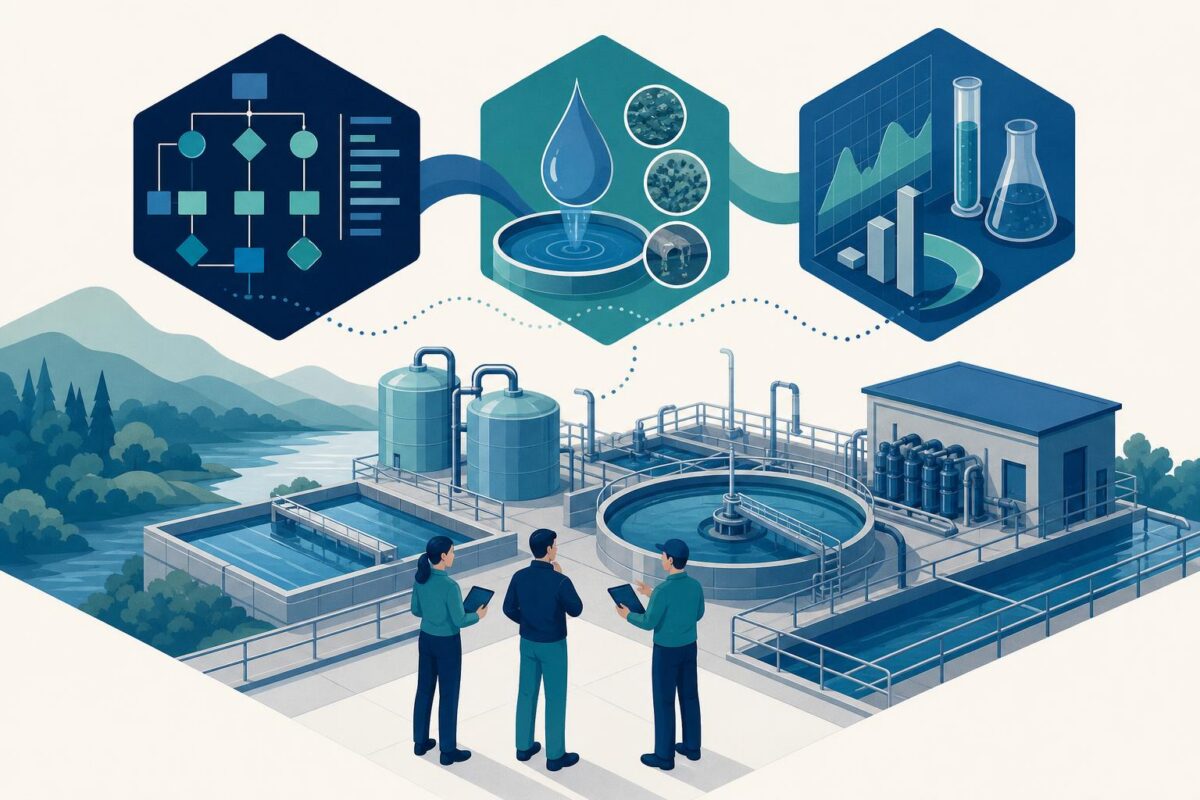
Water treatment support should never confuse clear-looking water with verified water quality. A customer's report may concern a visible leak, an equipment message, a changed operating result, or a failed measurement. Each needs a different response, and appearance alone cannot settle the most important questions.
Viewabo can help a site contact show the equipment arrangement and identify the exact point of a complaint. It is useful for organizing a support conversation about physical systems. It does not test water, determine its suitability for use, or replace the site's qualified water-management personnel.
Identify the system and its intended use
First, establish what the treatment equipment serves. The question may involve process water, a commercial kitchen, building services, or another defined application. The use determines which responsible people and procedures belong in the conversation.
Next, identify the asset and its place in the system. Similar housings and tanks can be difficult to distinguish verbally. Use existing labels and documentation that the caller can access safely, without opening or disturbing equipment.
Also record who owns the system. A facilities team, a specialist contractor, and an equipment supplier may each hold different responsibilities. Clarify those boundaries before the customer gets passed between them.
Separate the four kinds of evidence
A useful case distinguishes visible condition, operating records, measured results, and customer observations. A wet floor belongs in the first category. A laboratory result belongs in another. Do not turn one into a substitute for the other.
Ask the site to explain where a measurement came from, when it was taken, and which procedure governed it. Support should not interpret a detached number without the context needed by the qualified reviewer.
Irrigation support applies site-specific intake to the landscape and controller; visible equipment context still does not establish the whole system’s performance.
Meanwhile, record the customer's practical concern. Perhaps a process cannot continue, or staff need a decision about an affected area. Naming that consequence helps the case owner arrange the right response without making a water-safety judgment.
Use water treatment support to clarify the physical path
A broad, safe view may help the specialist understand which equipment comes before and after the reported location. This is particularly useful when site names differ from supplier terminology.
Ask the caller to point out accessible labels and the relevant external arrangement. Do not ask anyone to trace a line into a hazardous area, operate unfamiliar valves, or open a pressurized housing for a closer look.
The original 2012 WaterSense at Work guide includes treatment-related equipment in commercial facility water management. For intake, treat the installation as part of a wider operation and match each reported result to its point of use.
The water filter support guide applies that distinction to cartridge identification and the customer’s reported complaint.
Preserve the sequence of changes
Record recent service, approved replacement activity, known supply changes, and the first observation of the complaint. Use dated records when possible. If timing is uncertain, say so explicitly.
A condition noticed after maintenance is not proof that maintenance caused it. Likewise, a changed reading does not by itself identify a failed component. The technical reviewer needs a reliable timeline rather than an early conclusion.
Ask what the site has already done under its procedures. That prevents repeated requests and helps the next specialist understand the present state. It also makes any operating restrictions visible to everyone handling the case.
Route decisions to the right authority
If suitability or safety is in question, the responsible site personnel should follow the applicable testing and response process. A support agent should not offer reassurance based on water color, clarity, or a favorable-looking display.
Equipment service decisions also need the appropriate expertise. The visual discussion may establish which unit requires inspection, what documentation is missing, and who needs to attend. It should not improvise treatment settings or chemical handling instructions.
Name one case owner who coordinates the equipment and water-quality questions. The customer should receive a clear explanation of what is known, what remains open, and who will answer each part.
One useful question is whether the affected sample and the reported equipment serve the same point of use. A result from another location can still matter, but it should not silently become evidence about this unit. Ask the qualified reviewer to establish that relationship before choosing a service response.
Close only the questions that have evidence
A repaired leak and a verified treatment result are different outcomes. Document each separately. If one is complete and the other is pending, keep that distinction visible instead of closing the entire matter with a broad "fixed."
Use the site's required measurements and acceptance procedures to confirm the relevant performance. A visual check can help document an externally observable condition, but it cannot replace those methods.
Viewabo fits where physical ambiguity slows the support process. It can help people identify the same equipment, explain the same observation, and plan a better specialist handoff. Start with that limited purpose. Pair shared understanding with qualified assessment, and make the next decision clear without claiming that a camera can answer a question that requires testing.
Background reference: WaterSense at Work, original edition.
Related reading: why video belongs in customer support.