
Commercial Oven Support: Show the Uneven Result

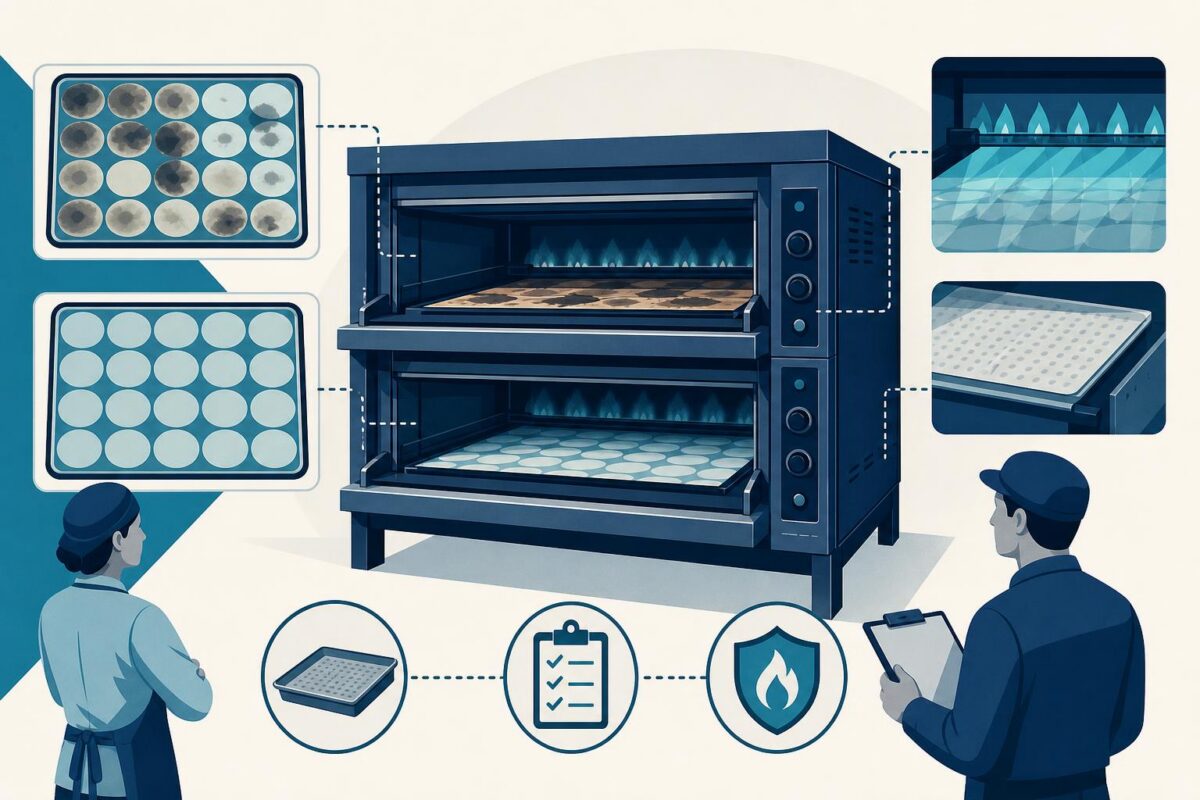
Commercial oven support should begin with the cooking result and the relevant operating context. An uneven batch, an interrupted process, and an unavailable oven are different complaints. A service team that hears only "the oven is not working" can miss the evidence that would make the next decision more useful.
Viewabo can help authorized kitchen staff show a safely handled result and explain the equipment arrangement. The purpose is clearer troubleshooting communication. It does not determine food safety, verify cooking temperatures, or authorize work on gas or electrical systems.
Describe the failed result precisely
First, ask what the kitchen expected and how the actual result differs. A visible pattern across a tray may be relevant, but it is not the same as a measured temperature or a verified process failure.
Keep the applicable kitchen checks separate from appearance. The site's responsible personnel should decide what product can be used and which equipment restrictions apply. Support should not offer reassurance based on a remote view of cooked food.
Also note whether the complaint concerns every batch, one product, or one part of the oven's normal use. The pattern helps the qualified specialist choose the next question without establishing a cause prematurely.
Give commercial oven support a meaningful comparison
A representative result is more useful than the most dramatic isolated item. If the site can safely provide a valid comparison, identify which product and operating context each example represents.
Explain the position of the affected result using the kitchen's established references. "The back corner of this tray" is clearer when everyone understands how the tray was oriented in the oven. Preserve that orientation in the service notes.
Do not ask staff to handle hot items, reach into unsafe areas, or recreate a failed cooking event to make the pattern visible. The site's normal safe handling and food-safety procedures remain the boundary.
Keep loading and equipment questions distinct
The expert may need to understand the ordinary load arrangement and whether it changed. Ask neutrally. A different tray or batch size is an investigation input, not proof that the operator caused the complaint.
Likewise, note recent approved service and the first time the issue appeared. A reliable sequence helps the technician evaluate the case. A confident but unsupported explanation can send the work in the wrong direction.
EPA's original 2012 WaterSense at Work guide includes commercial cooking equipment in facility operations. For support, the useful starting point is the relationship between the oven, the load, and the reported cooking result.
The household oven support guide offers a related result-first intake, while retaining the distinction between domestic and commercial operating conditions.
Do not turn the call into a repair demonstration
Support should not ask staff to access heating elements, burners, gas connections, wiring, or restricted service panels. Qualified work belongs with the appropriate provider following the manufacturer's and site's procedures.
If the report suggests a potentially hazardous condition, the site's emergency response takes priority over routine troubleshooting. The call should not encourage continued operation so the specialist can watch what happens.
For non-emergency concerns, collect safely available information and identify the missing technical evidence. A remote discussion is useful when it makes the need for a qualified inspection more specific, even if it cannot resolve the issue itself.
Prepare the technician for the actual complaint
The service brief should name the oven, the affected result, the pattern, the timing, and any approved measurements or checks already completed. It should also identify the relevant product or process that will be available for verification.
A technician who sees only an empty, operating oven may not be able to answer the customer's original question. Coordinate the required context through the responsible kitchen manager without prescribing an unapproved test.
Meanwhile, clarify access and the service window. Kitchen operations, cleaning, and other contractors may affect the visit. One case owner should make those arrangements and explain what the technician is expected to establish.
Include the point in the process when staff first noticed the uneven result. An issue observed immediately after cooking is different from one reported after holding or later preparation. The specialist needs that sequence so the investigation does not assign every final-product concern to the oven.
Verify the result through the kitchen's process
After authorized work, return to the original requirement. The responsible team should use the appropriate checks for equipment performance and food handling. An oven that heats is not necessarily delivering the result the kitchen needs.
If the complaint depends on a particular product or service pattern, note whether verification included it. When it did not, keep the limitation explicit and assign follow-up rather than declaring full resolution.
Viewabo can help where a kitchen's physical result is difficult to describe in a ticket. Use it to make the pattern clear, preserve the operating context, and direct the right specialist to the right question. The customer gets a more useful service plan without confusing a visual impression with a measured or professionally verified outcome.
Background reference: WaterSense at Work, original edition.
Related reading: why video belongs in customer support.