
Refrigerator Support: Separate Temperature Facts from Guesses

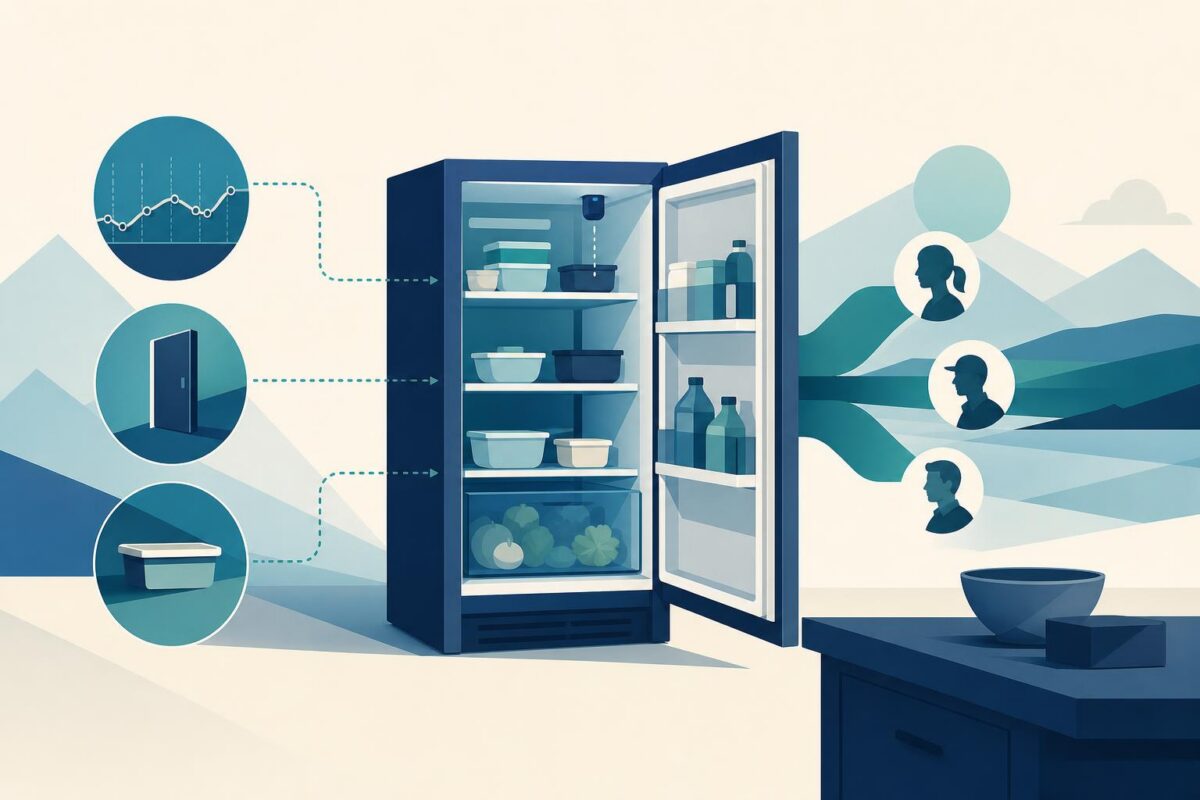
Refrigerator support should begin with temperature facts and a timeline, not a quick look at food that appears normal. A customer may report that one shelf feels warm, a display seems wrong, or a door will not close fully. Those observations need careful separation. The support team should not turn an appliance conversation into an unsupported judgment about whether food is safe to eat.
Viewabo can help an agent understand the visible door, storage arrangement, and controls. The value is shared context for triage. It cannot measure internal temperatures through a camera, assess hidden refrigeration components, or certify food safety from appearance.
Refrigerator support starts with the time-sensitive concern
Ask when the customer first noticed the problem and what evidence they have. Distinguish a measured reading from a feeling that the refrigerator is warmer than usual. Record the measuring method and timing without assuming every display reports the same thing.
If food safety is uncertain, direct the customer to appropriate food-safety guidance rather than suggesting a taste test or visual judgment. Keep that decision separate from diagnosing the appliance. Restoring cooling later does not establish that previously stored food remained safe.
Identify whether the concern affects the refrigerator compartment, freezer, or one area. That gives the next question a location and prevents a broad not cold complaint from obscuring useful detail.
Read the controls in their proper context
Confirm the model and consult its instructions for displayed settings and messages. A selected target and a measured temperature may not mean the same thing. Ask the customer to read the exact label rather than interpreting a number without context.
Bosch’s Bosch Benchmark design guide, volume 5 documents different refrigeration and built-in appliance arrangements. The support lesson is to identify the actual installation and product guidance before assuming a familiar control or layout applies.
Commercial refrigeration support adds site operations and product-protection responsibilities to the intake; it should not be treated as an identical household workflow.
Ask whether the appliance was recently installed, moved, restocked, or affected by a power interruption. These facts can shape the investigation, but they should not become automatic explanations that dismiss the customer’s concern.
Observe the door and accessible storage area
A brief view can show whether an item prevents normal door closure or whether the customer’s concern involves a visibly damaged seal area. Compare accessible conditions with the manufacturer’s guidance. Do not ask the customer to remove a door or alter hinges as an improvised fix.
Keep the inspection focused and avoid holding the door open unnecessarily. The agent usually needs to understand one relevant area, not inventory private household food. If a shelf or drawer arrangement is involved, use the documented user instructions.
Refrigerator support must also acknowledge what the camera cannot establish. A door that appears closed does not certify its seal, and a tidy compartment does not prove that cooling performance is correct.
Do not turn the customer into a refrigeration technician
Concealed components, wiring, refrigerant circuits, and built-in clearances may require qualified assessment. Do not ask the customer to pull out a heavy appliance, remove panels, probe components, or handle an uncertain electrical connection.
If there is smoke, burning, damage, or another hazardous condition, stop ordinary troubleshooting and follow the appropriate professional or emergency process. A visual conversation can identify a reason to stop; it cannot eliminate the underlying risk.
For installation questions, prepare a handoff with the model, reported timing, accessible observations, and any exact messages. Avoid naming a failed compressor or sensor from an incomplete account of noises and temperature impressions.
Our independent GE Appliances support analysis explains why installation context belongs beside the temperature complaint.
Plan an observation window with a clear owner
Where the manufacturer’s guidance supports a normal user-level check, explain what will change and when the result should be reassessed. Cooling behavior may not be meaningfully verified during a short conversation. Repeatedly changing controls can make the timeline harder to interpret.
Record the agreed next reading or observation and who will review it. If the customer needs urgent storage alternatives, address that practical need through appropriate guidance without marking the refrigerator fixed.
Be explicit about unresolved uncertainty. The door obstruction has been removed, but the temperature outcome still needs verification is an honest update. A brief visual improvement should not become a broad assurance about the appliance or its contents.
Verify the original compartment concern
At follow-up, return to the same compartment and measuring approach. Confirm whether the result meets the applicable product guidance and whether the original symptom remains. Keep any food-safety decision separate and tied to appropriate authoritative advice.
For service cases, include the timeline, selected settings, reported readings, and completed checks. State what could not safely be observed remotely. That record can make the next assessment more focused without pretending to replace it.
Viewabo helps support teams understand physical context that a short text description can miss. The broader idea appears in why video belongs in customer support. Refrigerator support is strongest when it combines that context with careful measurement, clear uncertainty, and an accountable follow-up.